01 / 16
NEEYAFIT

NeeyaFit  ·  Nutrition Webinar Series

CarbohydratesFriend or a Foe?


Simple. Realistic. Sustainable. For life.

By Sindhu
Clinical Nutritionist & Lifestyle Expert

↓ Press to begin
A steel thali of brown rice, dal, chapati, sabzi, curd and banana
Sindhu R, Clinical Nutritionist

Your coach

Sindhu . R

Clinical Nutritionist · Lifestyle Expert

MS. Food Science & Clinical Nutrition (2018, Bangalore)
Work Experience — 8 Years

Food is not just fuel, it’s powerful daily medicine.

01What you eat should feel sustainable & practical — something you can see yourself practicing for years, not weeks or months.
02Your diet should not stress you out or make you unhappy.
03Your diet may not be your medicine, but it should help you prevent disease or support healing — and reduce the need for higher doses of medicines.

01  ·  One of the three macronutrients — alongside protein and fat.

Carbohydrates (Carbs): Your Body’s Main Fuel
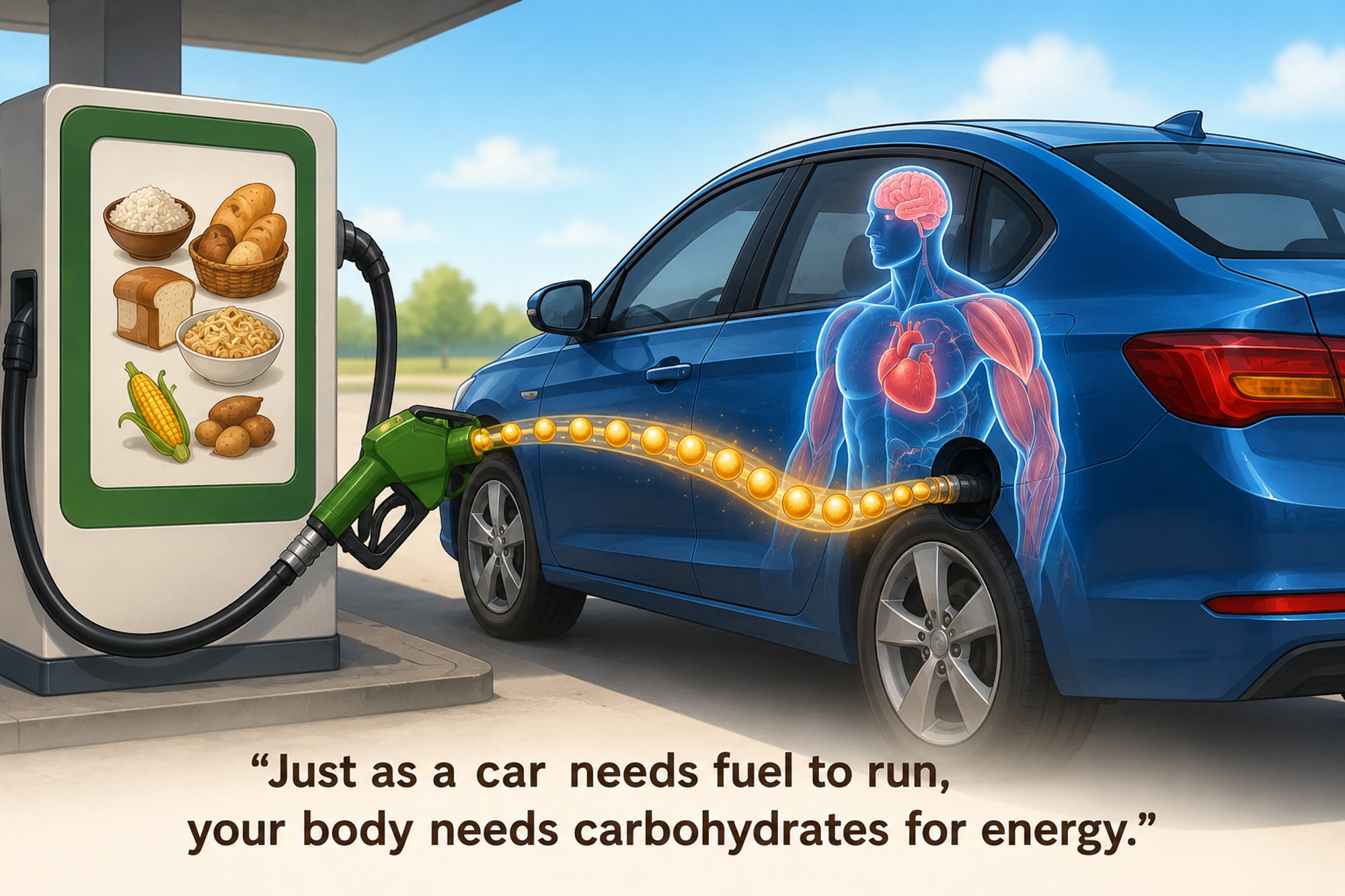
A fuel pump dispensing carbohydrate foods — rice, potatoes, bread, pasta, corn — into a car whose body shows a human brain, heart and muscles. “Just as a car needs fuel to run, your body needs carbohydrates for energy.”

The basics

What are carbohydrates?


Carbohydrates are one of the three major nutrients (macronutrients), along with protein and fat. Their main job is to provide your body with energy.

When you eat carbohydrates, your digestive system breaks them down into glucose (blood sugar). Glucose is the preferred fuel for your:
Brain

Muscles
Heart
Other body organs

“Think of carbohydrates as the petrol (fuel) that helps your body function every day.”
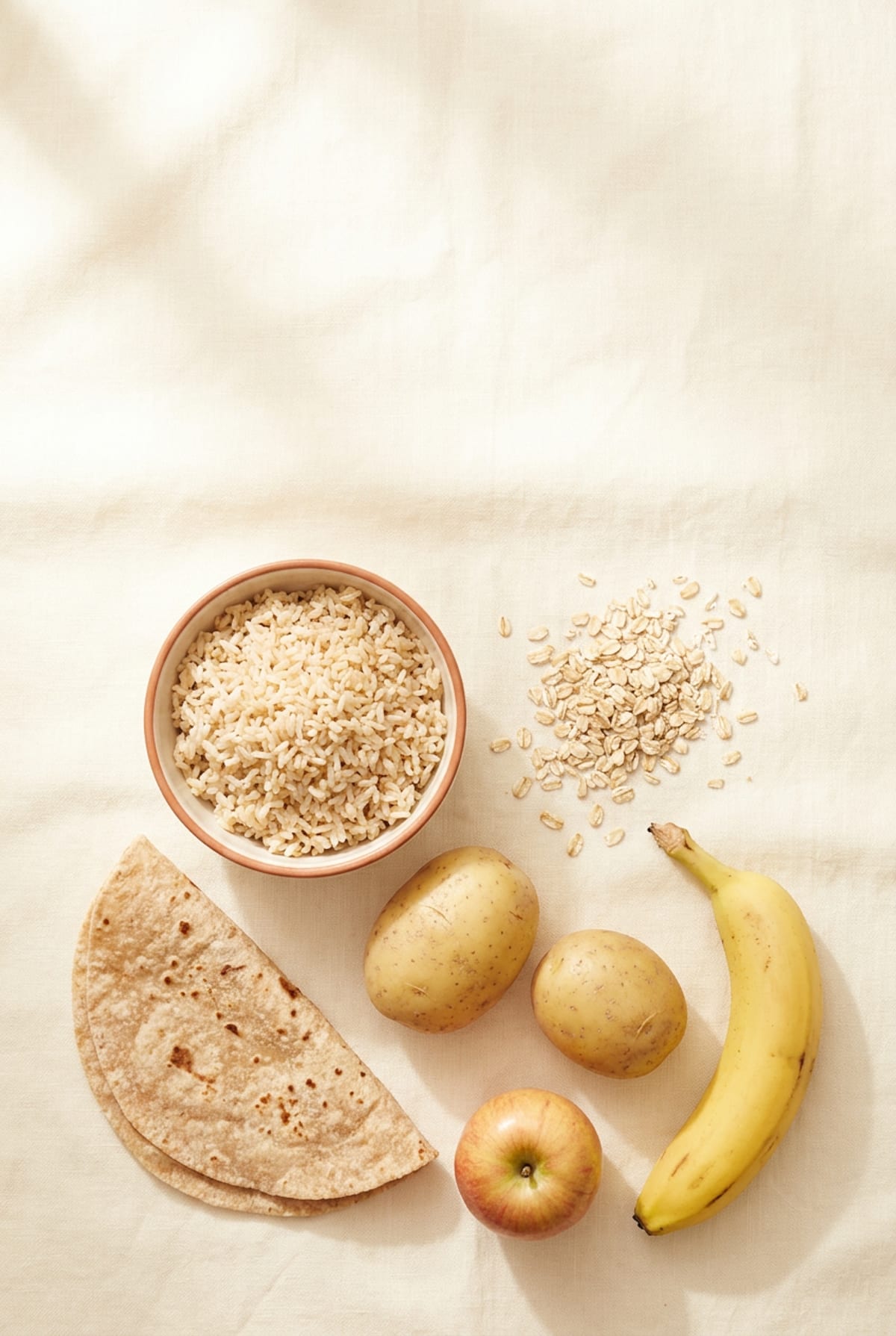
Everyday carbohydrate staples on cream linen: brown rice, a whole-wheat chapati, potatoes, a banana, an apple and rolled oats.

The journey

From food to energy: the journey of carbohydrates
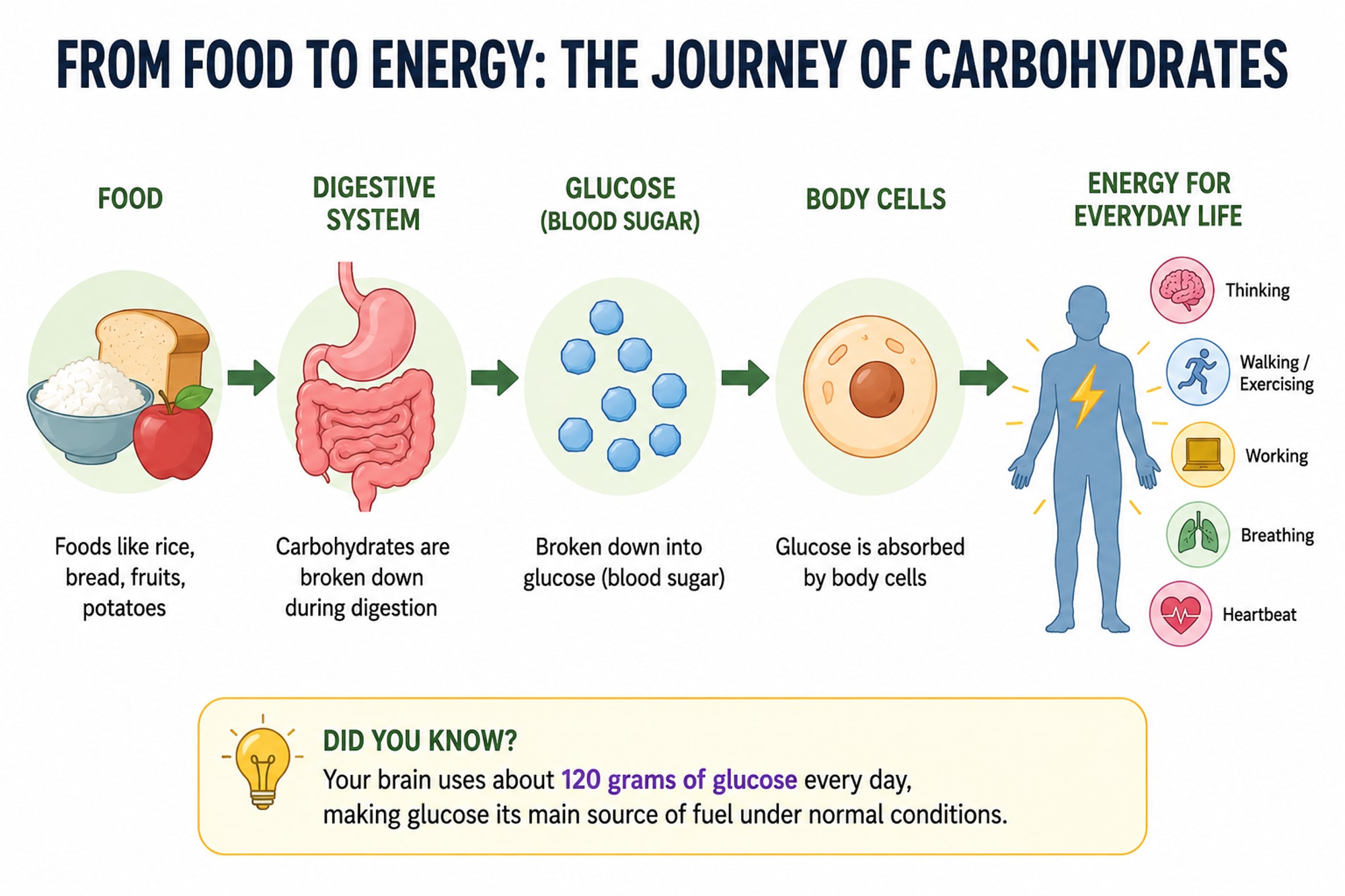
Food → digestive system → glucose (blood sugar) → body cells → energy for everyday life: thinking, walking or exercising, working, breathing, heartbeat. Did you know? Your brain uses about 120 grams of glucose every day, making glucose its main source of fuel under normal conditions.

Reframe

How the much-hated “carbs” help your body


Carbohydrates help by:

Energy

Providing the main source of energy for the body and especially the brain.

Protects muscles

Protecting muscles by allowing the body to use carbohydrates for energy instead of breaking down muscle protein.

Mood & sleep

Supporting mood and sleep by helping the body produce serotonin (“the feel-good hormone”).

Appetite

Helping regulate appetite by influencing hormones that control hunger and fullness.

An everyday South Indian breakfast on cream linen: idlis with sambar and coconut chutney, a whole-wheat chapati, upma, filter coffee and sliced banana.

Myth check

Are carbohydrates really the villain?
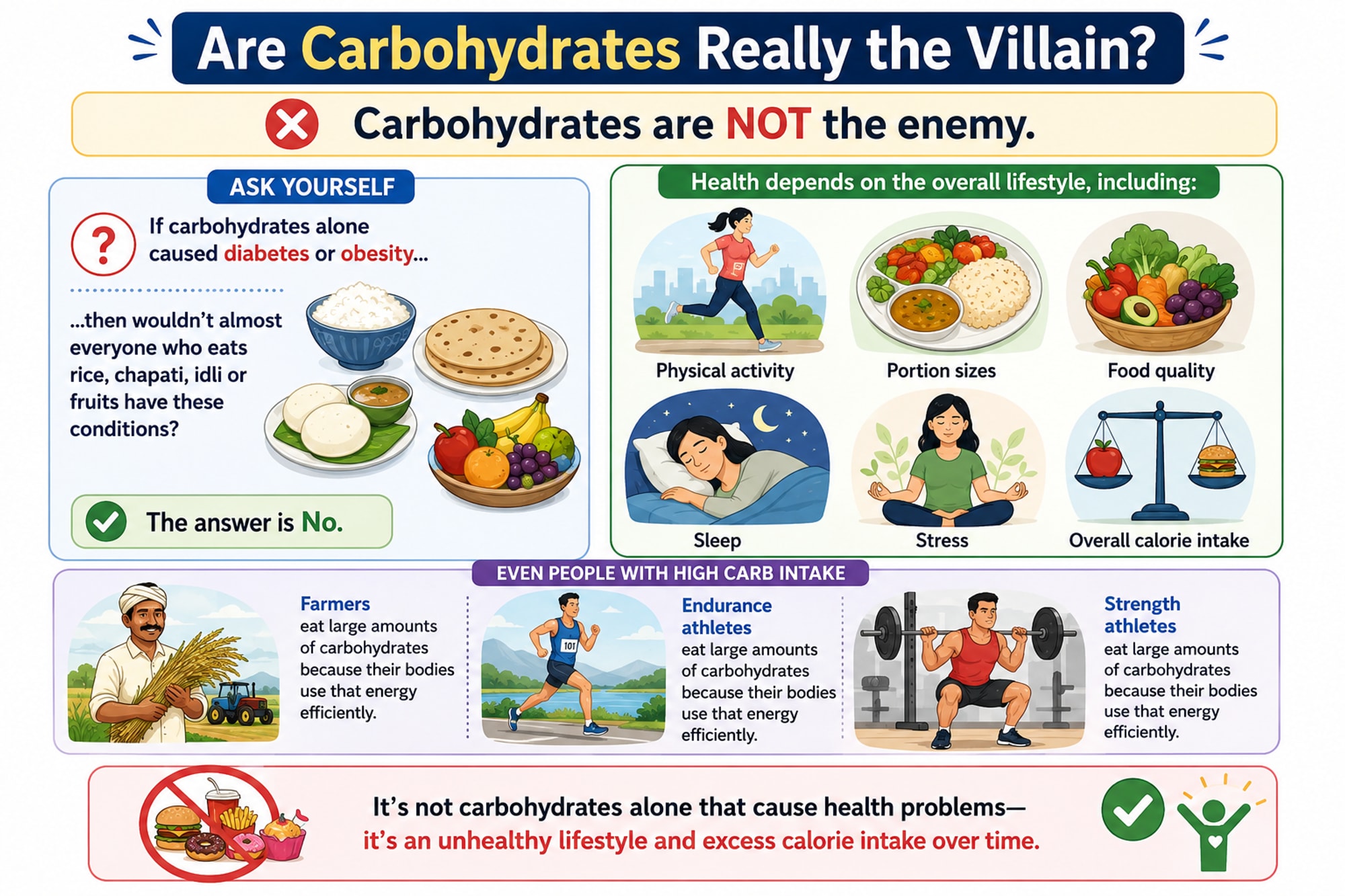
Carbohydrates are NOT the enemy. Ask yourself: if carbohydrates alone caused diabetes or obesity, then wouldn’t almost everyone who eats rice, chapati, idli or fruits have these conditions? The answer is No. Health depends on the overall lifestyle, including physical activity, portion sizes, food quality, sleep, stress and overall calorie intake. Even people with high carb intake — farmers, endurance athletes and strength athletes — eat large amounts of carbohydrates because their bodies use that energy efficiently. It’s not carbohydrates alone that cause health problems — it’s an unhealthy lifestyle and excess calorie intake over time.

The science

Carbohydrates = spiking blood sugar — the goal: bring down the spike
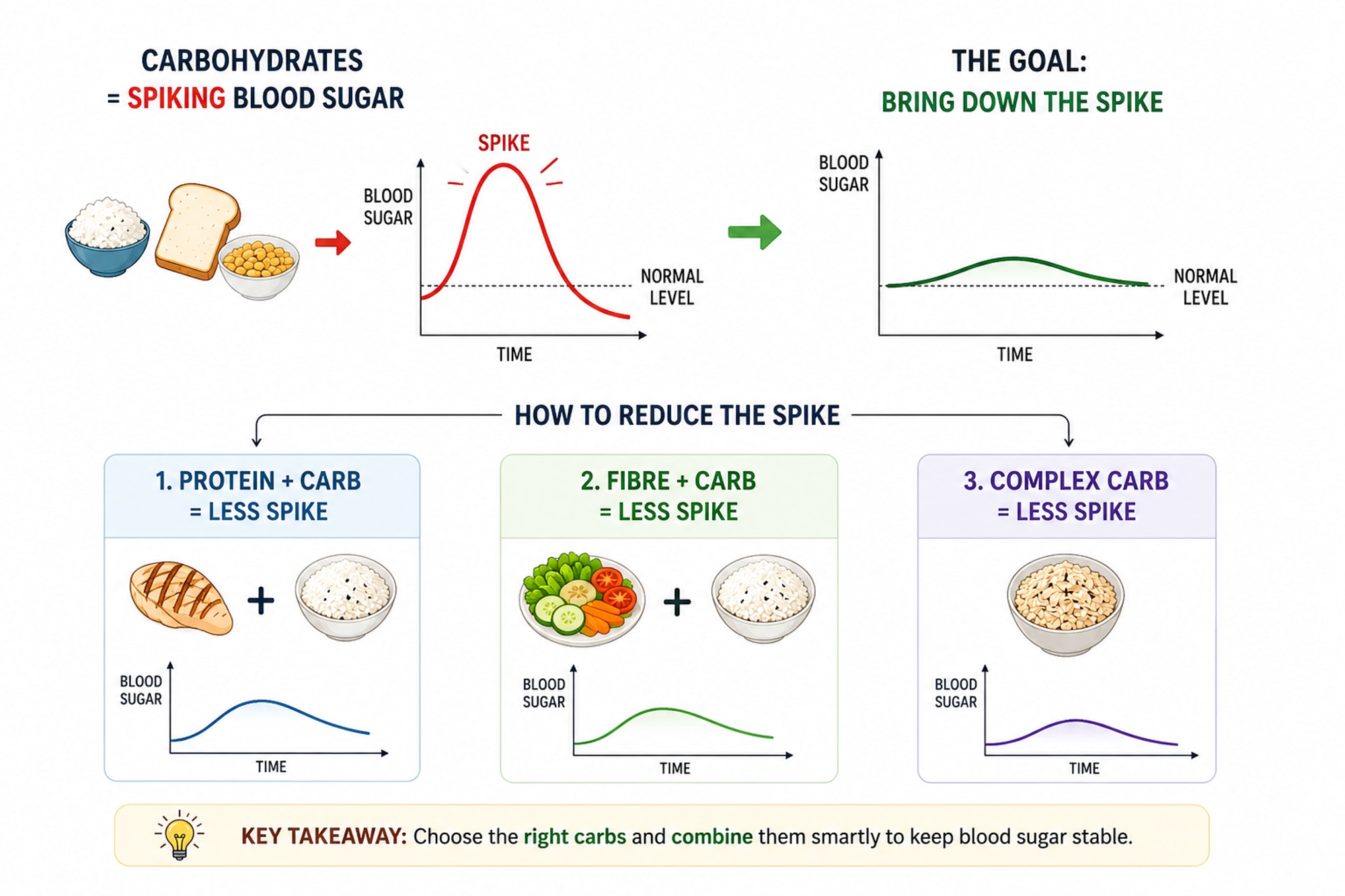
Carbohydrates = spiking blood sugar. The goal: bring down the spike. A sharp spike rises far above the normal level then crashes below it; the goal is a gentle curve that stays near the normal level. How to reduce the spike: 1. Protein + carb = less spike. 2. Fibre + carb = less spike. 3. Complex carb = less spike. Key takeaway: choose the right carbs and combine them smartly to keep blood sugar stable.

Choose right

It’s not about ALL carbs… it’s about choosing the RIGHT ones!
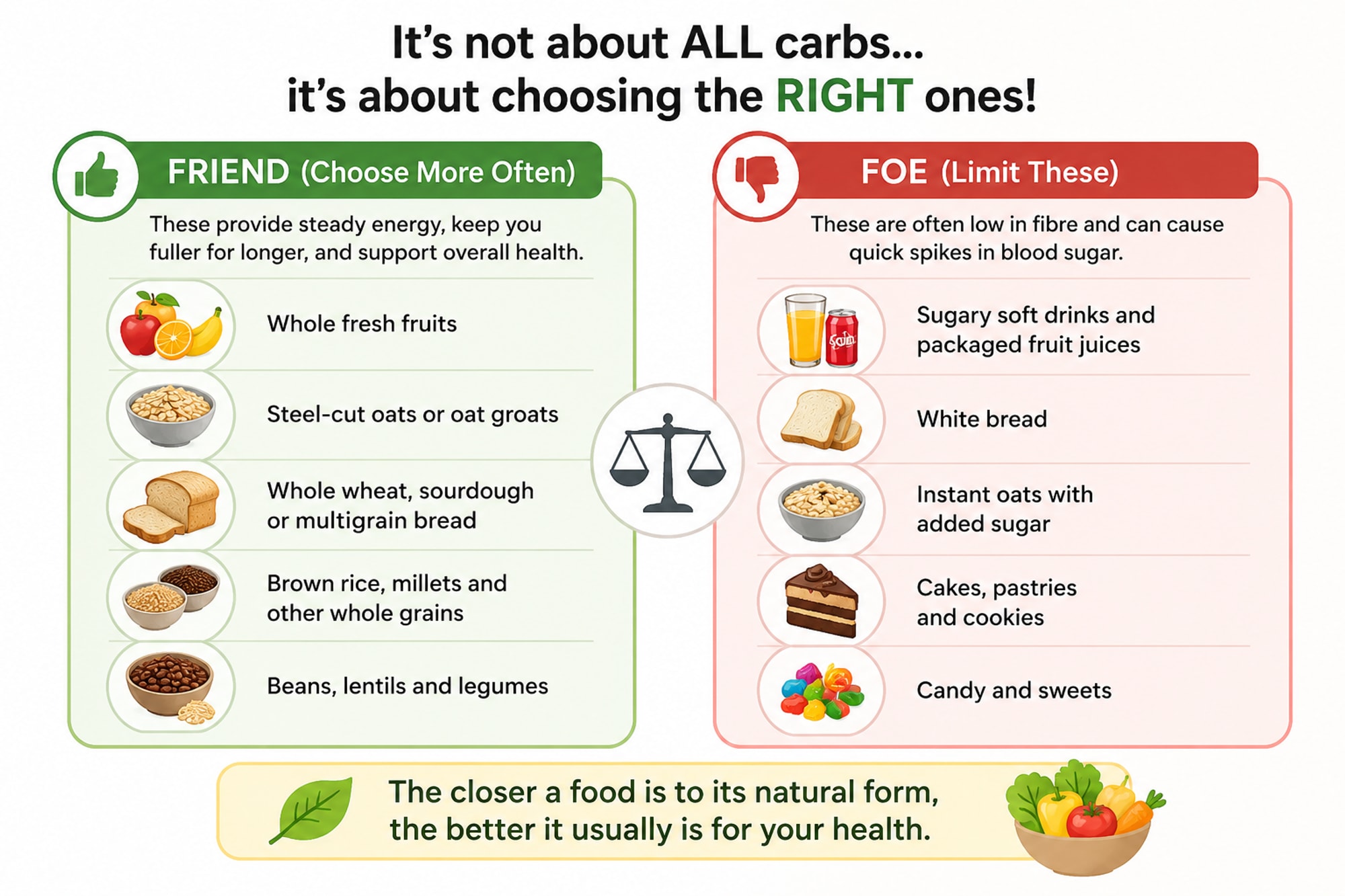
Friend (choose more often): whole fresh fruits; steel-cut oats or oat groats; whole wheat, sourdough or multigrain bread; brown rice, millets and other whole grains; beans, lentils and legumes. Foe (limit these): sugary soft drinks and packaged fruit juices; white bread; instant oats with added sugar; cakes, pastries and cookies; candy and sweets. The closer a food is to its natural form, the better it usually is for your health.

Strength training

How do carbohydrates help during strength training?
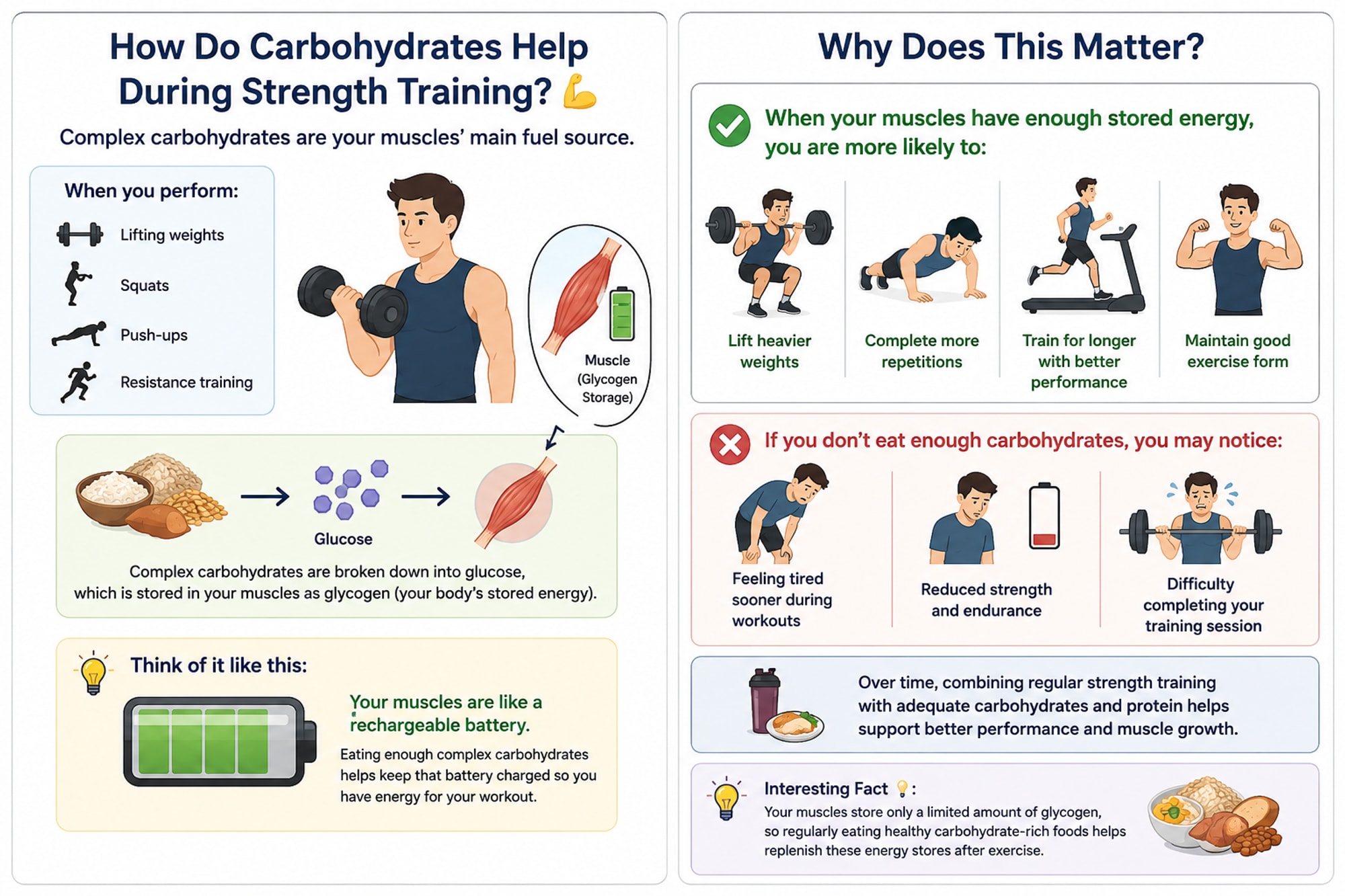
Complex carbohydrates are your muscles’ main fuel source. When you perform lifting weights, squats, push-ups or resistance training, complex carbohydrates are broken down into glucose, which is stored in your muscles as glycogen. Think of it like this: your muscles are like a rechargeable battery. Why does this matter? With enough stored energy you are more likely to lift heavier weights, complete more repetitions, train for longer with better performance and maintain good exercise form. If you don’t eat enough carbohydrates you may notice feeling tired sooner during workouts, reduced strength and endurance, and difficulty completing your training session. Interesting fact: your muscles store only a limited amount of glycogen.

Muscle

Carbohydrates protect & build your muscles
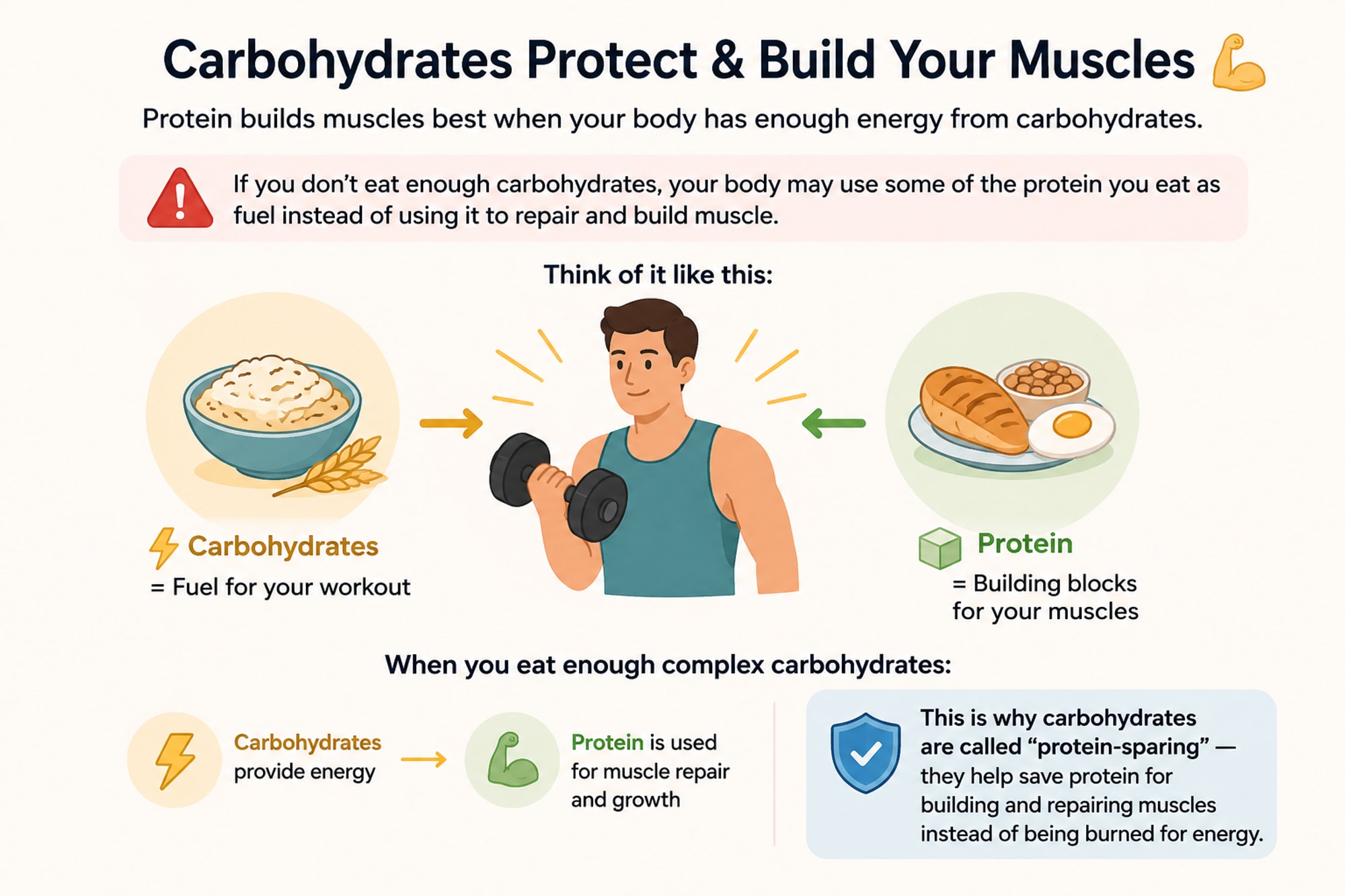
Protein builds muscles best when your body has enough energy from carbohydrates. If you don’t eat enough carbohydrates, your body may use some of the protein you eat as fuel instead of using it to repair and build muscle. Carbohydrates = fuel for your workout. Protein = building blocks for your muscles. This is why carbohydrates are called protein-sparing.

Recovery

Carbohydrates help you recover & perform better
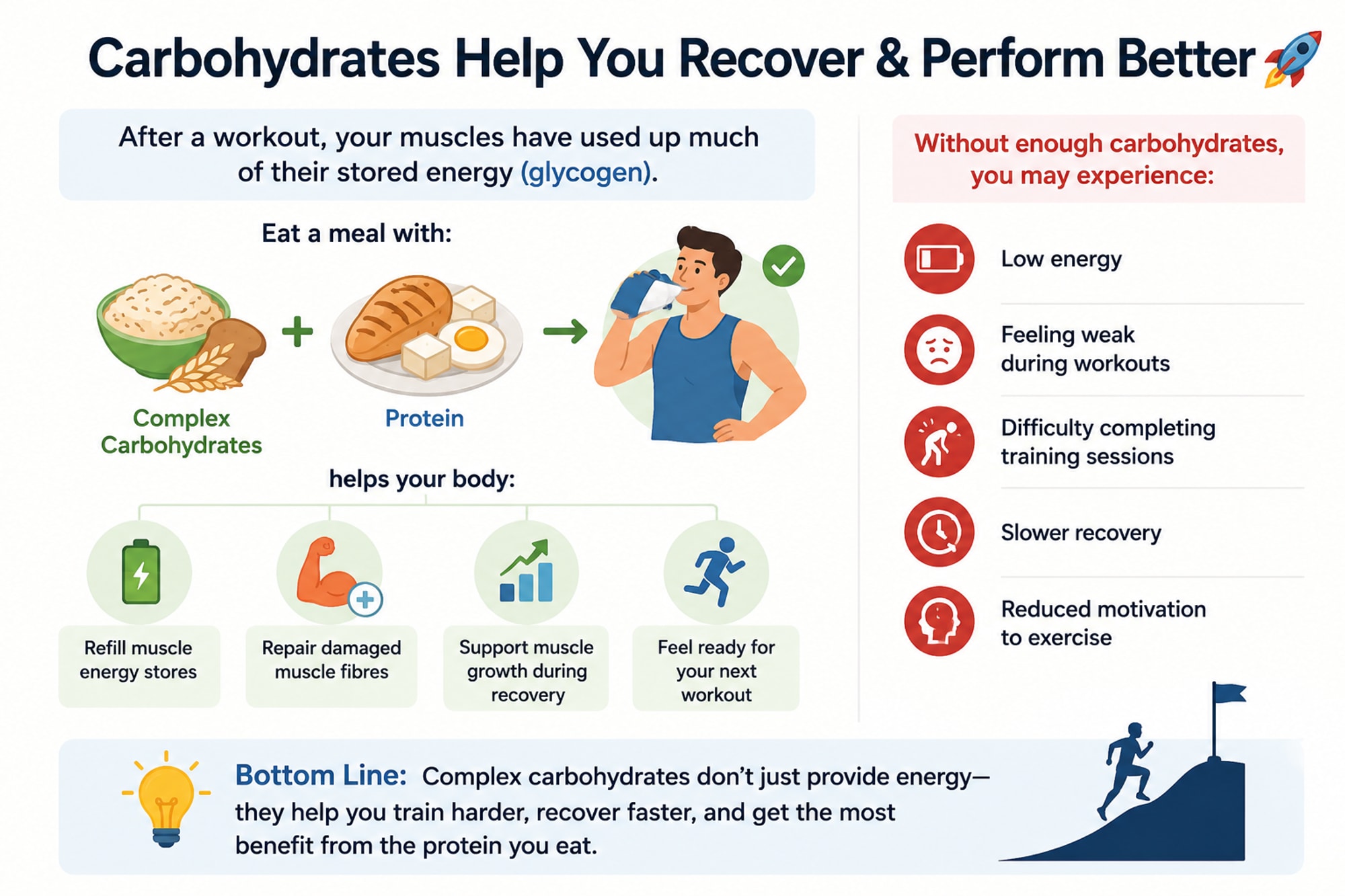
After a workout, your muscles have used up much of their stored energy (glycogen). Eat a meal with complex carbohydrates plus protein. It helps your body refill muscle energy stores, repair damaged muscle fibres, support muscle growth during recovery and feel ready for your next workout. Without enough carbohydrates you may experience low energy, feeling weak during workouts, difficulty completing training sessions, slower recovery and reduced motivation to exercise. Bottom line: complex carbohydrates don’t just provide energy — they help you train harder, recover faster, and get the most benefit from the protein you eat.

Thank You!


Keep striving towards good health.
See you in the next session!

NeeyaFit  ·  Simple. Realistic. Sustainable. For life.