01 / 15
NEEYAFIT

NeeyaFit  ·  Nutrition webinar

Meet your coach
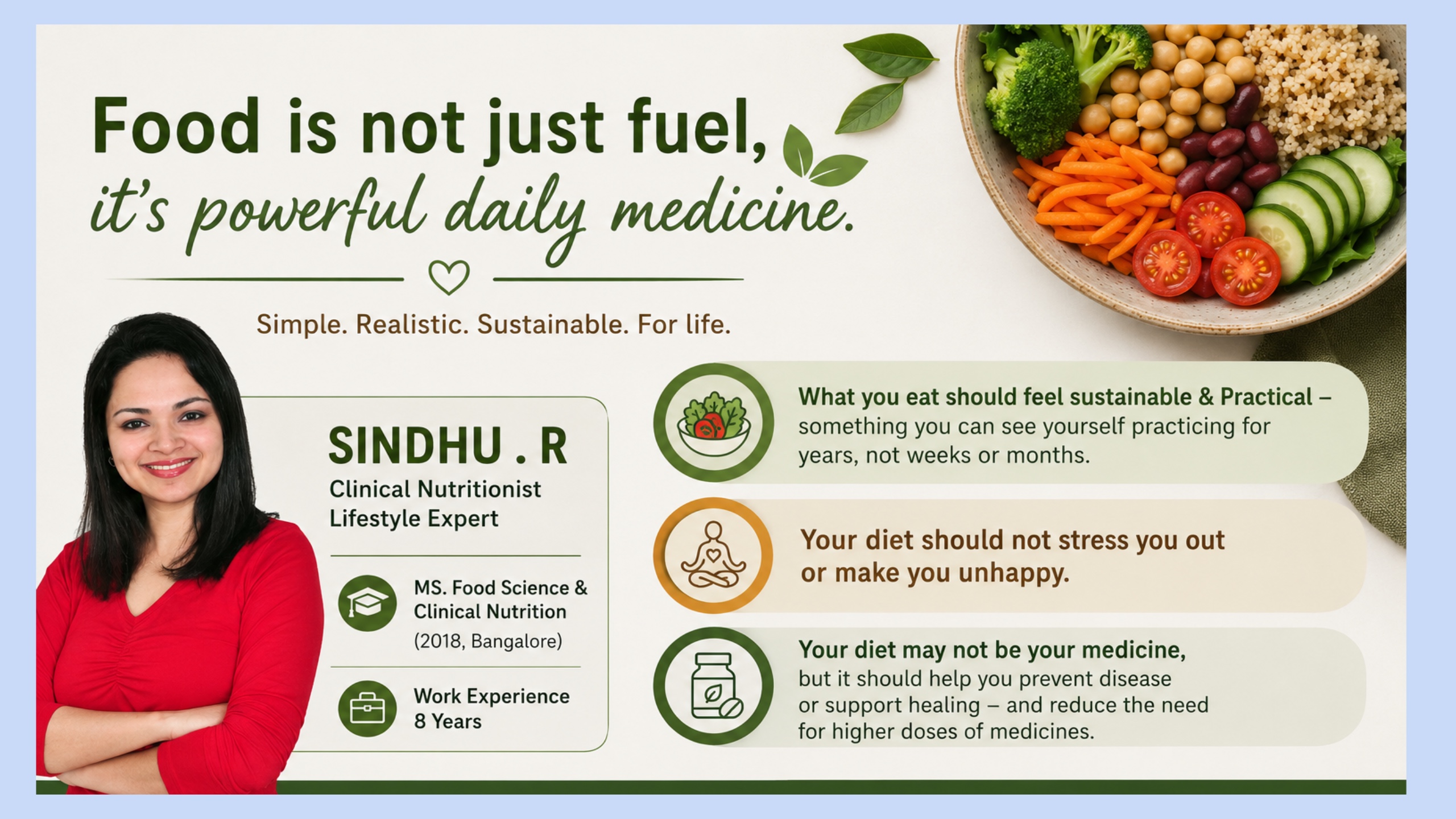
Food is not just fuel, it’s powerful daily medicine. Simple. Realistic. Sustainable. For life. Sindhu R, Clinical Nutritionist and Lifestyle Expert. MS Food Science and Clinical Nutrition, 2018, Bangalore. Work experience 8 years. What you eat should feel sustainable and practical, something you can see yourself practising for years, not weeks or months. Your diet should not stress you out or make you unhappy. Your diet may not be your medicine, but it should help you prevent disease or support healing and reduce the need for higher doses of medicines.

The basics

Macronutrient: Fats

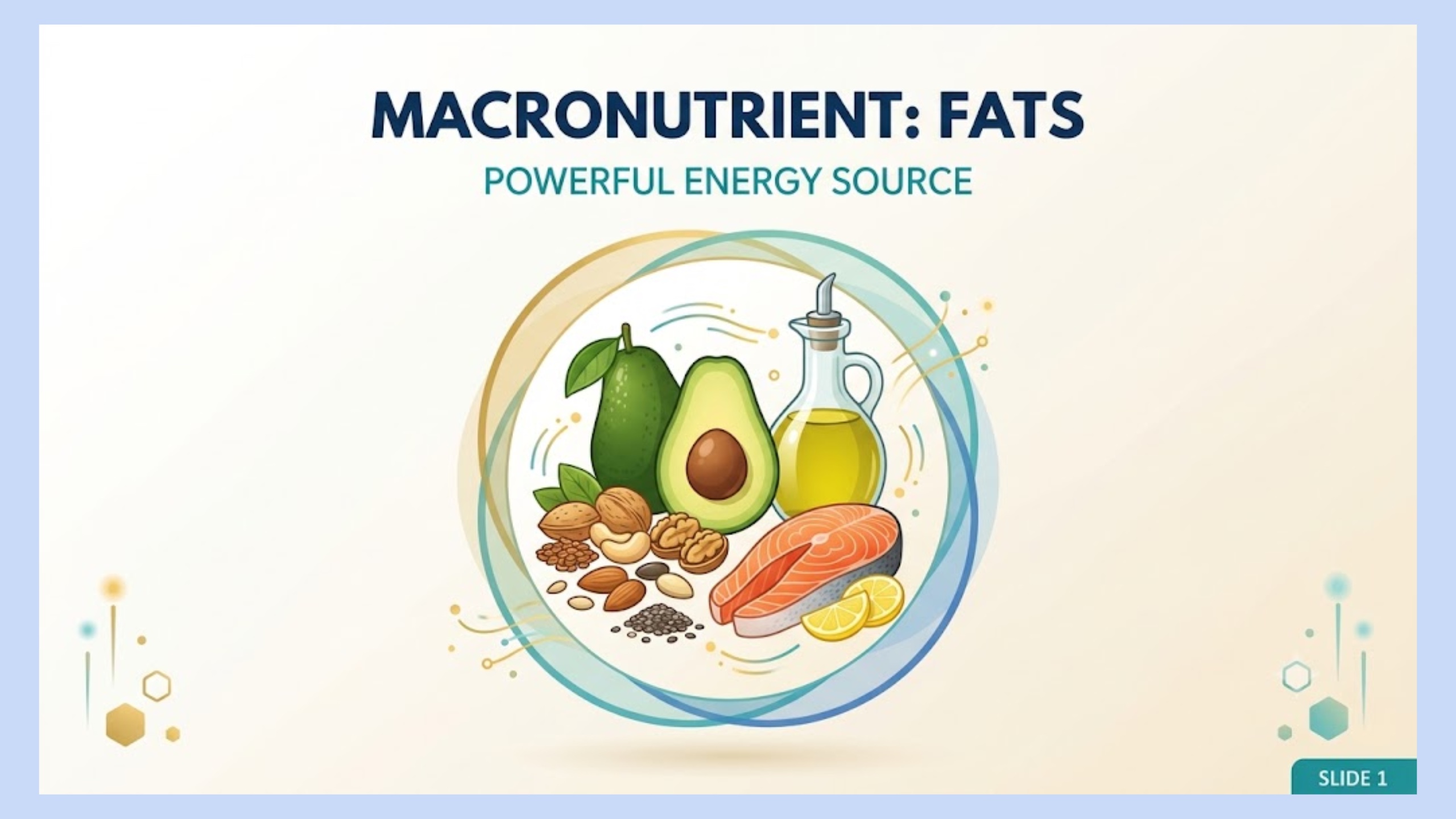
Macronutrient: Fats. Powerful energy source.

A common myth

Does fat make you fat?

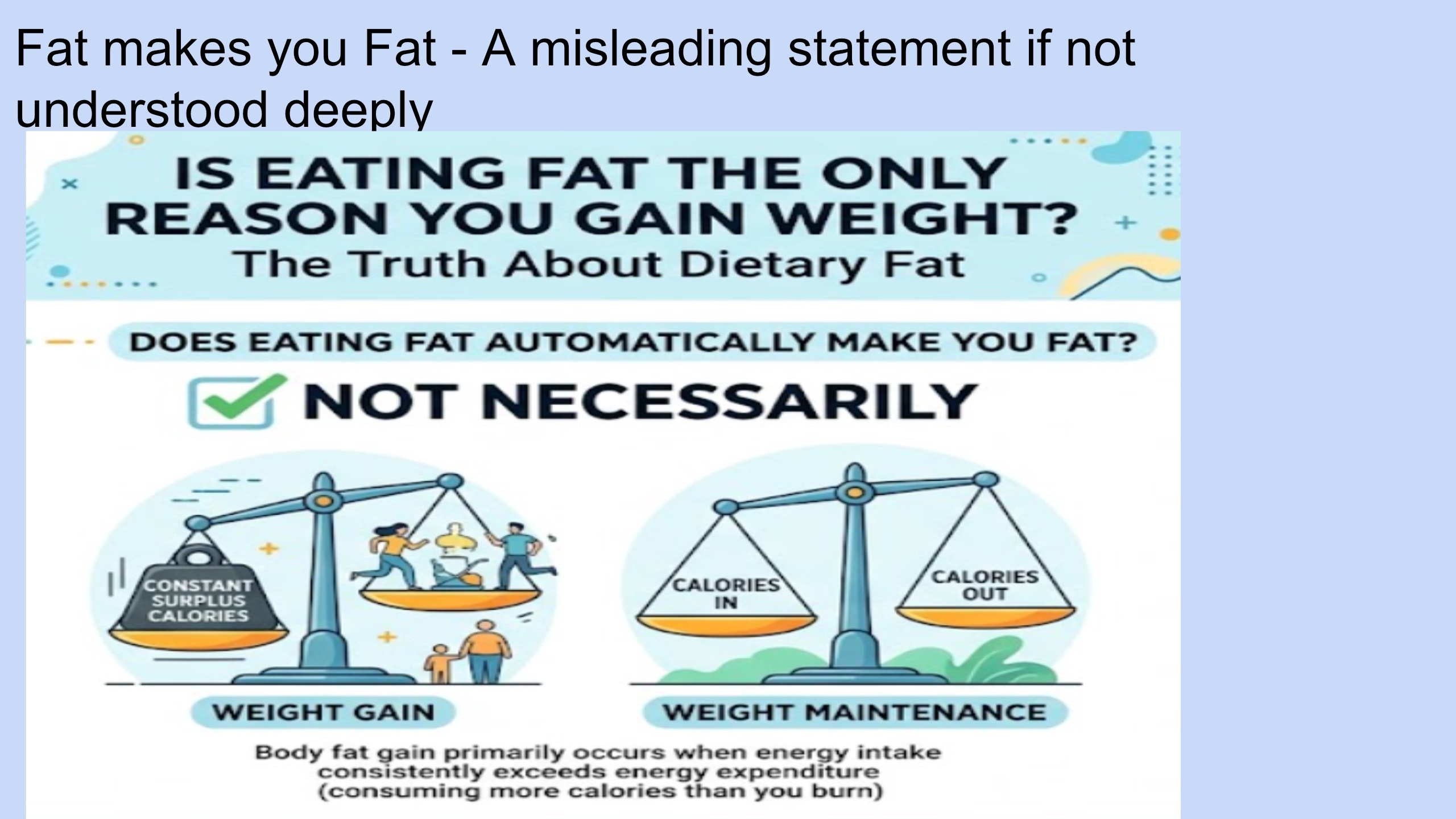
Fat makes you fat, a misleading statement if not understood deeply. Is eating fat the only reason you gain weight? The truth about dietary fat. Does eating fat automatically make you fat? Not necessarily. Constant surplus calories can lead to weight gain. Balanced calories in and calories out support weight maintenance. Body fat gain primarily occurs when energy intake consistently exceeds energy expenditure, consuming more calories than you burn.

The bigger picture

Why fat matters—but isn’t the only cause
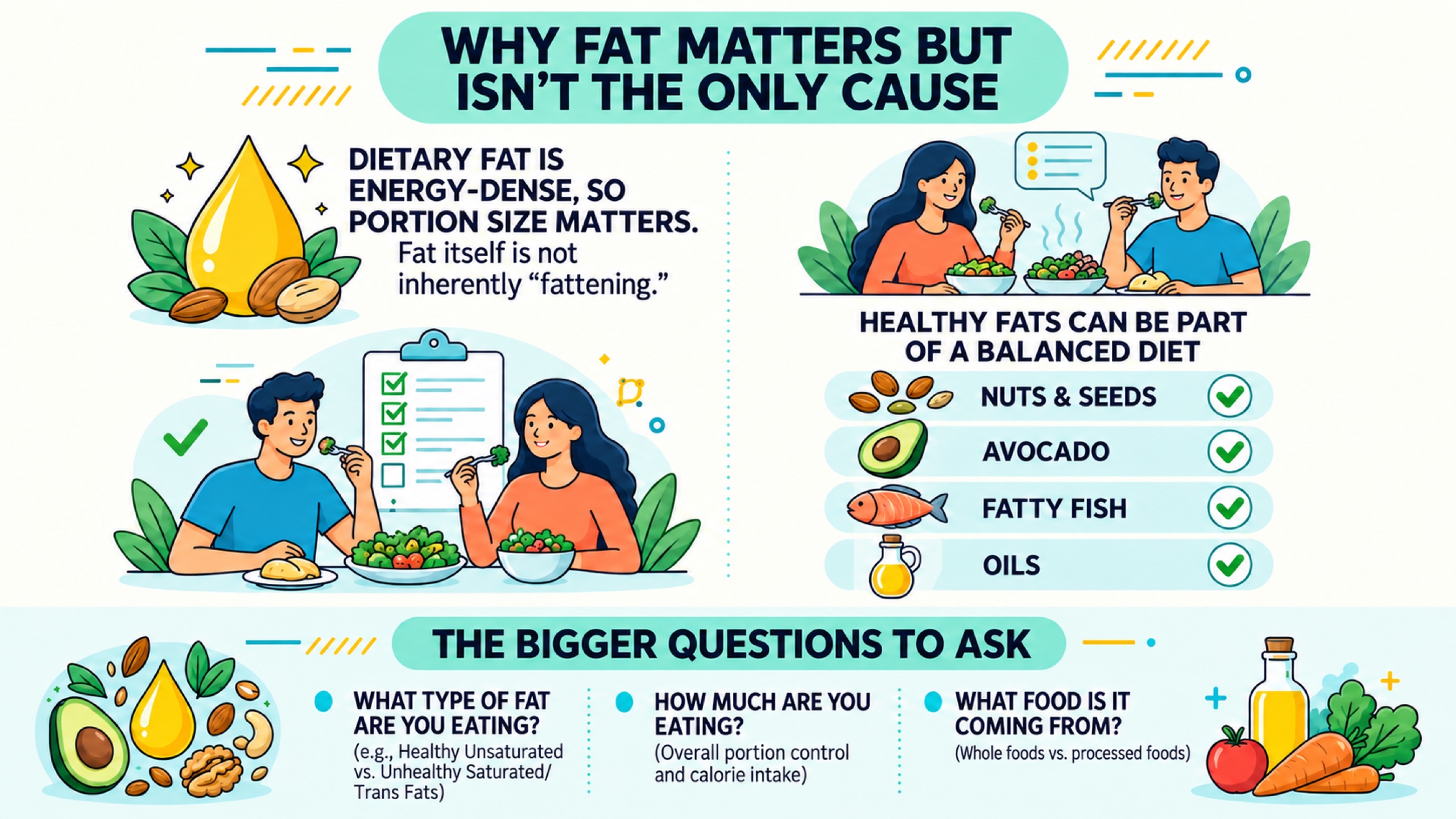
Why fat matters but isn’t the only cause. Dietary fat is energy-dense, so portion size matters. But fat itself is not inherently fattening. Healthy fats can be part of a balanced diet: nuts and seeds, avocado, fatty fish and oils. The bigger questions to ask: What type of fat are you eating, for example healthy unsaturated versus unhealthy saturated or trans fats? How much are you eating, considering overall portion control and calorie intake? What food is it coming from, whole foods versus processed foods?

An important distinction

Dietary fat ≠ body fat
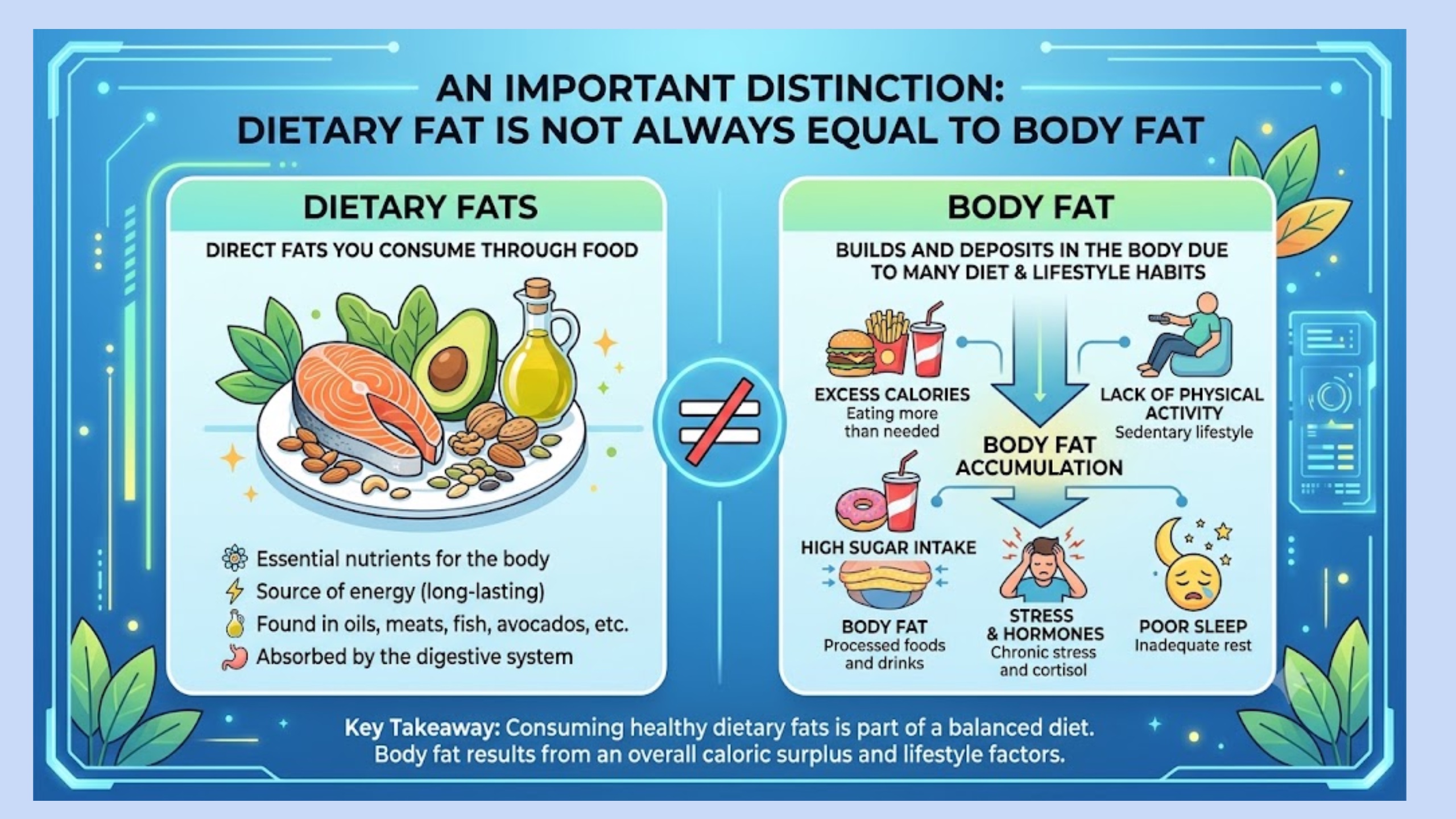
An important distinction: dietary fat is not always equal to body fat. Dietary fats are fats you consume through food. They are essential nutrients, a source of energy, found in oils, meats, fish and avocados, and absorbed by the digestive system. Body fat builds and deposits in the body due to many diet and lifestyle habits, including excess calories, lack of physical activity, high sugar intake, stress and hormones, and poor sleep. Key takeaway: consuming healthy dietary fats is part of a balanced diet. Body fat results from an overall caloric surplus and lifestyle factors.

Food labels

Read the ingredient list

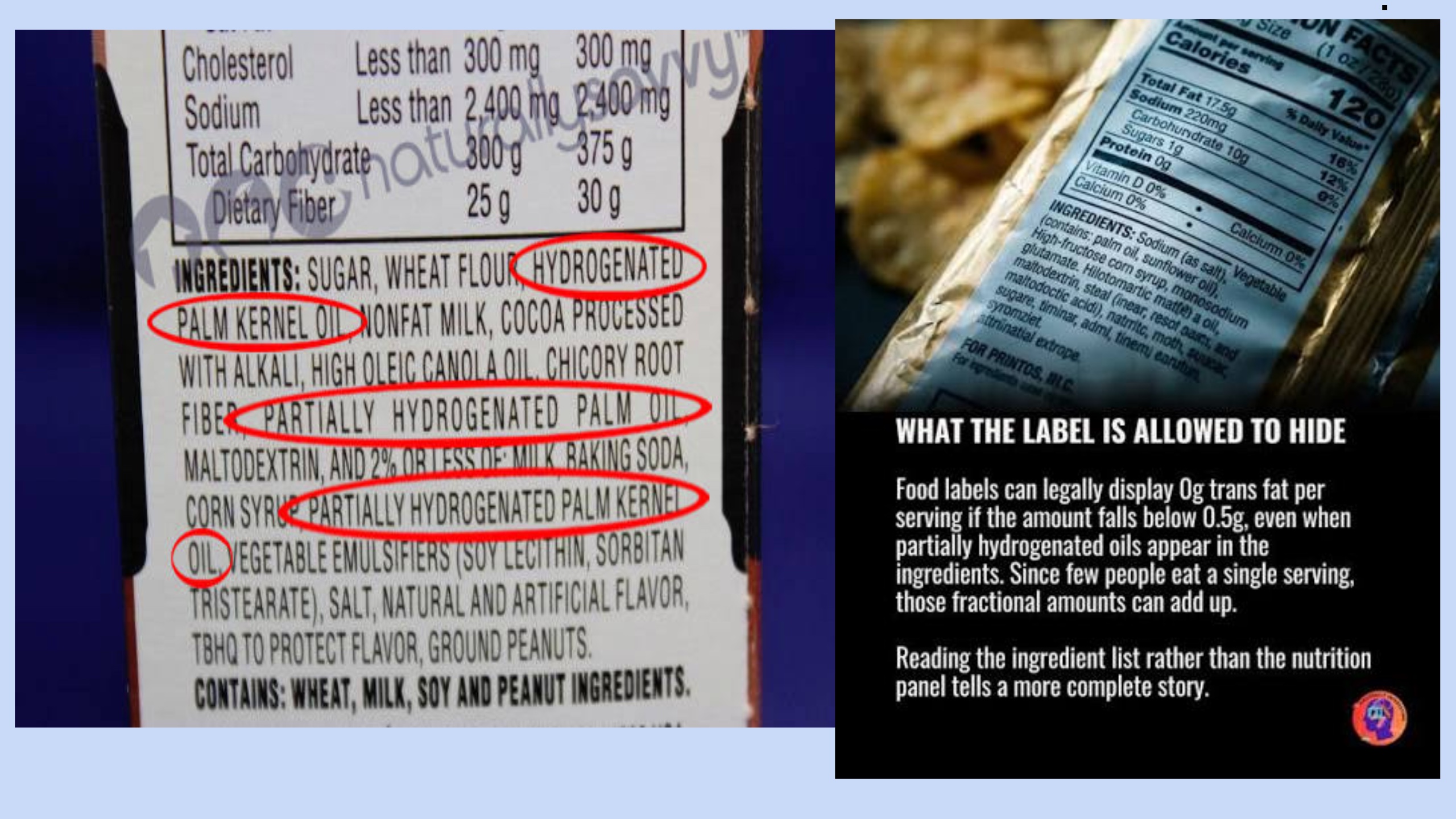
Ingredient lists highlight hydrogenated palm kernel oil, partially hydrogenated palm oil and partially hydrogenated palm kernel oil. What the label is allowed to hide: food labels can legally display zero grams trans fat per serving if the amount falls below 0.5 grams, even when partially hydrogenated oils appear in the ingredients. Since few people eat a single serving, those fractional amounts can add up. Reading the ingredient list rather than the nutrition panel tells a more complete story.

Cooking oils

Let’s study cooking oils
Let’s study cooking oils.

Beyond simple rules

Is heart-friendly oil always better?
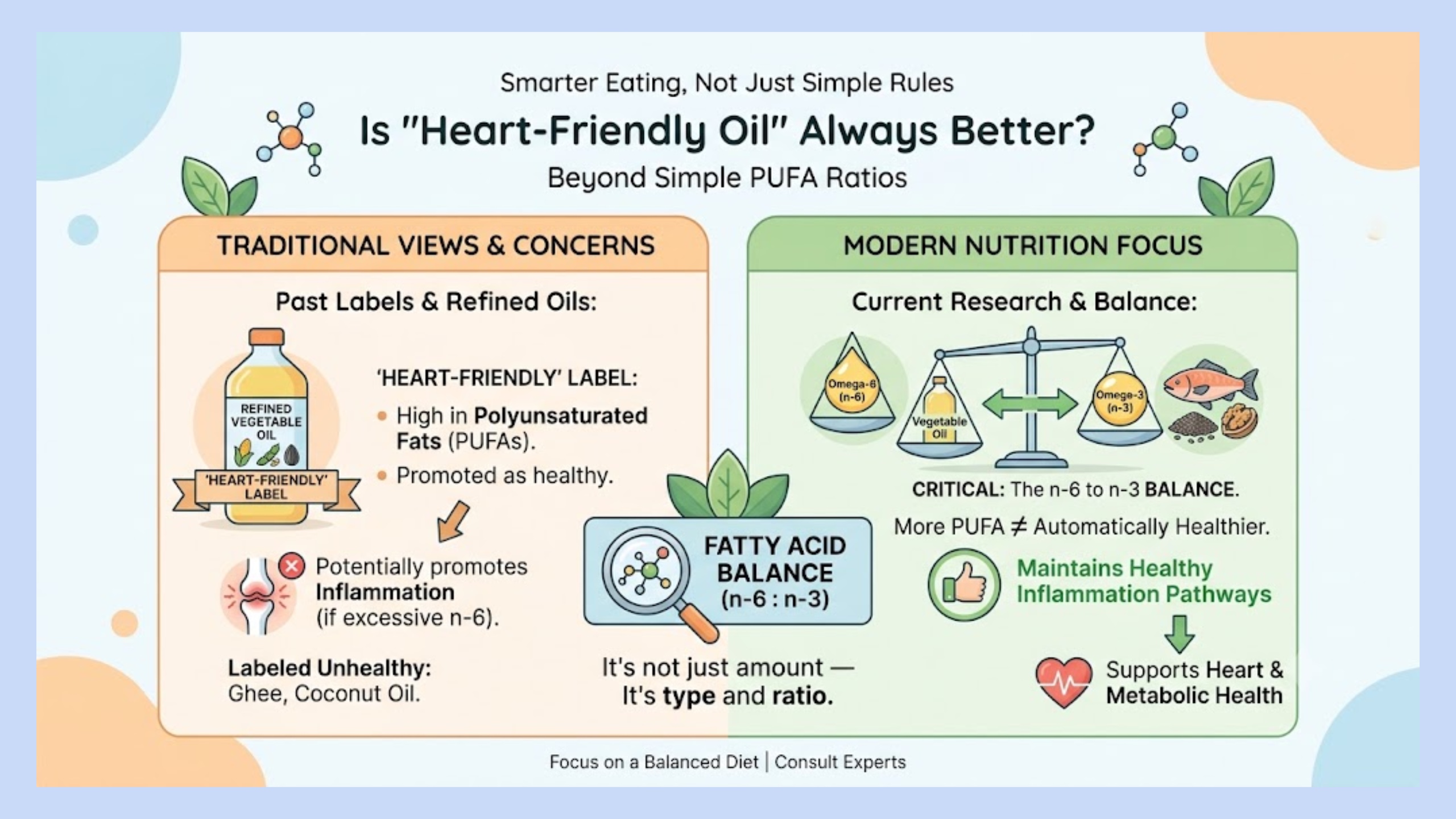
Smarter eating, not just simple rules. Is heart-friendly oil always better? Beyond simple PUFA ratios. Traditional views and concerns: past labels and refined oils. A heart-friendly label promoted oils high in polyunsaturated fats, while ghee and coconut oil were labelled unhealthy, with a concern that excessive omega-6 may promote inflammation. Modern nutrition focus: current research and balance. The omega-6 to omega-3 balance matters. More PUFA is not automatically healthier. Fatty-acid balance supports healthy inflammation pathways and heart and metabolic health. It is not just amount, it is type and ratio. Focus on a balanced diet and consult experts.

A practical approach

Think variety, not one “perfect” oil
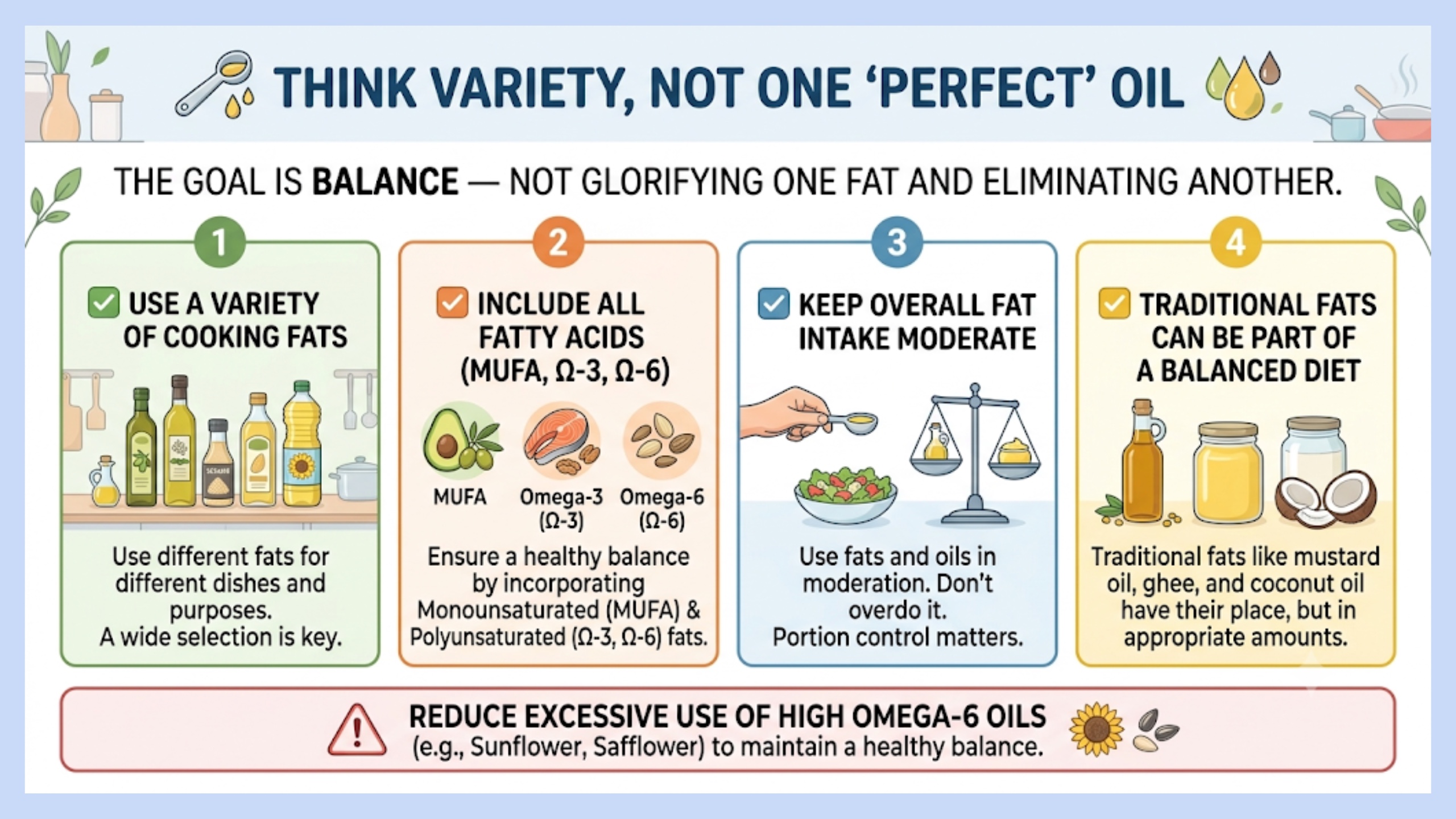
Think variety, not one perfect oil. The goal is balance, not glorifying one fat and eliminating another. Use a variety of cooking fats for different dishes and purposes. Include monounsaturated fat, omega-3 and omega-6 fatty acids. Keep overall fat intake moderate. Traditional fats such as mustard oil, ghee and coconut oil can be part of a balanced diet in appropriate amounts. Reduce excessive use of high omega-6 oils, such as sunflower and safflower, to maintain a healthy balance.

Traditional fats

Ghee: traditional, not unlimited
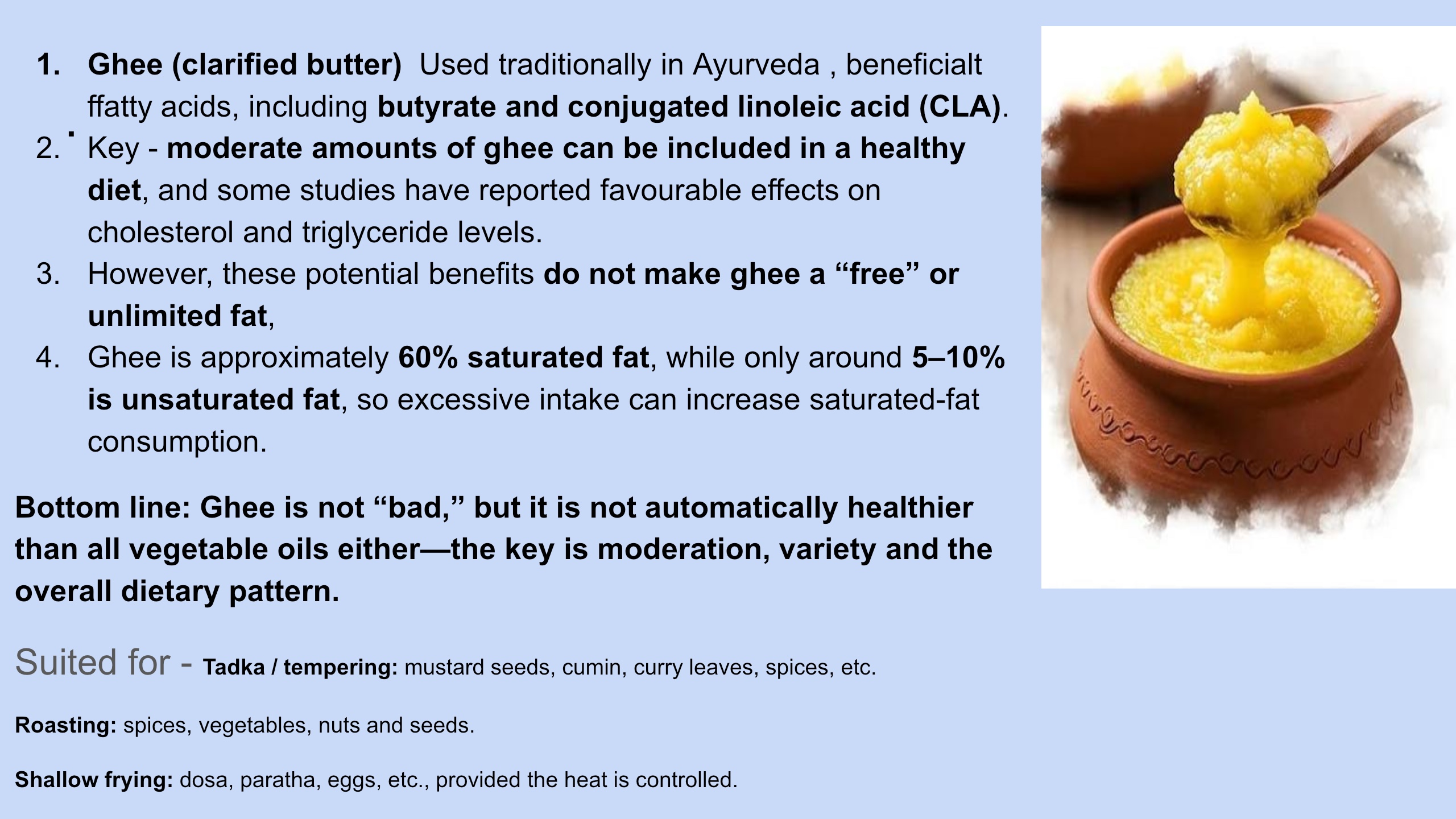
Ghee (clarified butter) Used traditionally in Ayurveda , beneficialt ffatty acids, including butyrate and conjugated linoleic acid (CLA). Key - moderate amounts of ghee can be included in a healthy diet, and some studies have reported favourable effects on cholesterol and triglyceride levels. However, these potential benefits do not make ghee a “free” or unlimited fat, Ghee is approximately 60% saturated fat, while only around 5–10% is unsaturated fat, so excessive intake can increase saturated-fat consumption. Bottom line: Ghee is not “bad,” but it is not automatically healthier than all vegetable oils either—the key is moderation, variety and the overall dietary pattern. Suited for - Tadka / tempering: mustard seeds, cumin, curry leaves, spices, etc. Roasting: spices, vegetables, nuts and seeds. Shallow frying: dosa, paratha, eggs, etc., provided the heat is controlled.

Traditional fats

Coconut oil: traditional, not unlimited
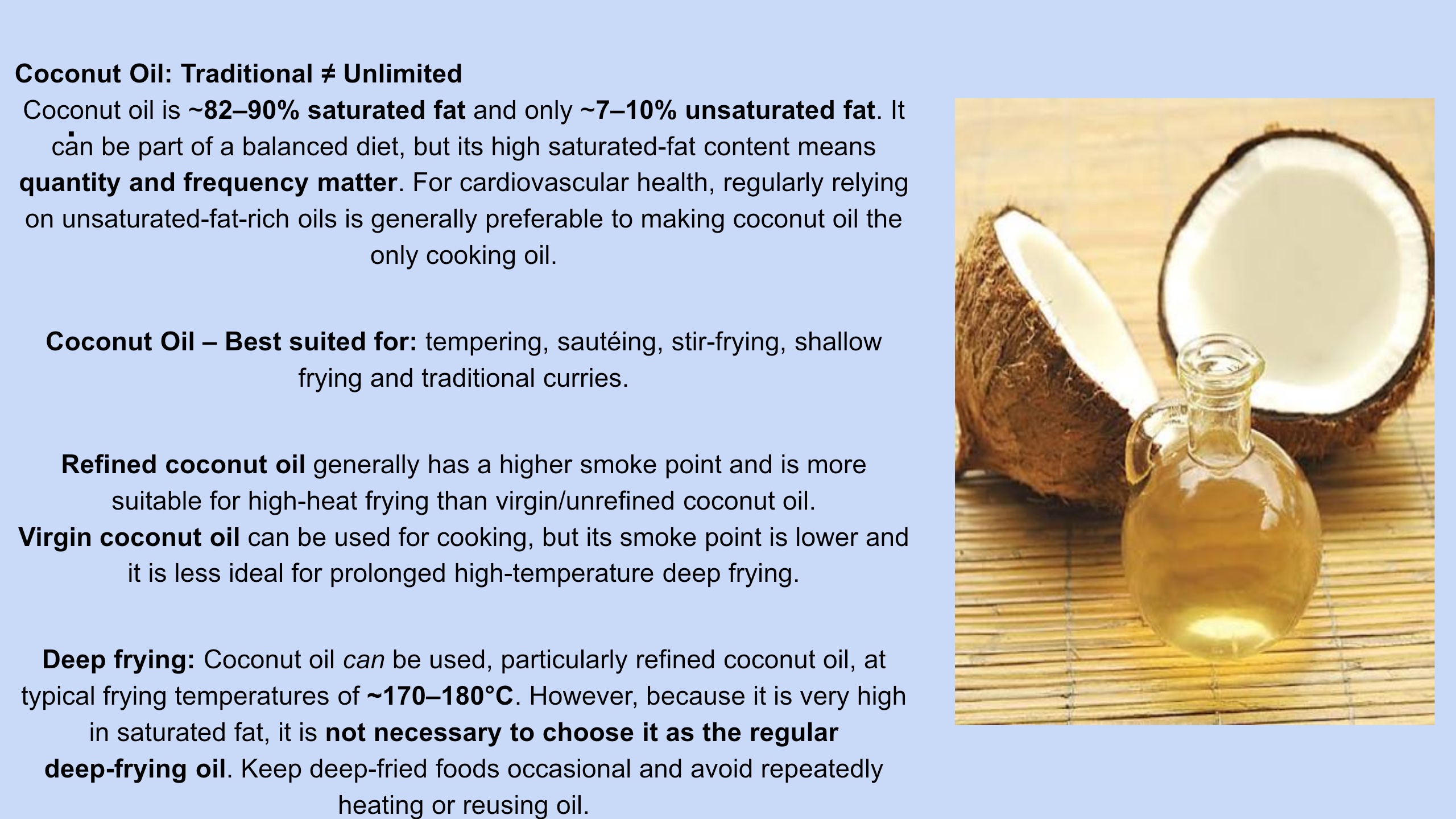
Coconut Oil: Traditional ≠ Unlimited. Coconut oil is ~82–90% saturated fat and only ~7–10% unsaturated fat. It can be part of a balanced diet, but its high saturated-fat content means quantity and frequency matter. For cardiovascular health, regularly relying on unsaturated-fat-rich oils is generally preferable to making coconut oil the only cooking oil. Coconut Oil – Best suited for: tempering, sautéing, stir-frying, shallow frying and traditional curries. Refined coconut oil generally has a higher smoke point and is more suitable for high-heat frying than virgin/unrefined coconut oil. Virgin coconut oil can be used for cooking, but its smoke point is lower and it is less ideal for prolonged high-temperature deep frying. Deep frying: Coconut oil can be used, particularly refined coconut oil, at typical frying temperatures of ~170–180°C. However, because it is very high in saturated fat, it is not necessary to choose it as the regular deep-frying oil. Keep deep-fried foods occasional and avoid repeatedly heating or reusing oil.

In the rotation

Mustard oil

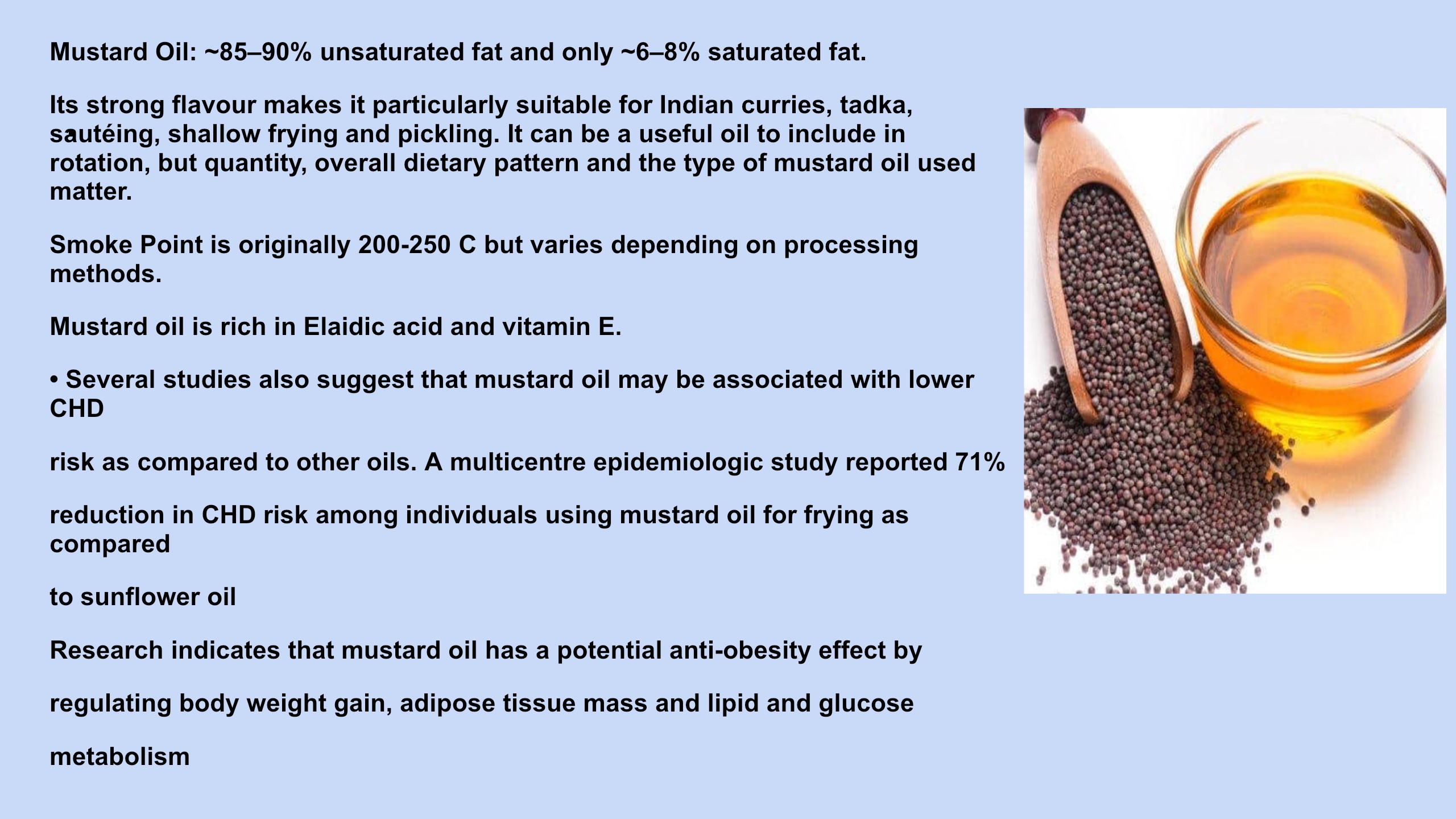
Mustard Oil: ~85–90% unsaturated fat and only ~6–8% saturated fat. Its strong flavour makes it particularly suitable for Indian curries, tadka, sautéing, shallow frying and pickling. It can be a useful oil to include in rotation, but quantity, overall dietary pattern and the type of mustard oil used matter. Smoke Point is originally 200-250 C but varies depending on processing methods. Mustard oil is rich in Elaidic acid and vitamin E. • Several studies also suggest that mustard oil may be associated with lower CHD risk as compared to other oils. A multicentre epidemiologic study reported 71% reduction in CHD risk among individuals using mustard oil for frying as compared to sunflower oil. Research indicates that mustard oil has a potential anti-obesity effect by regulating body weight gain, adipose tissue mass and lipid and glucose metabolism.

In the rotation

Olive oil for Indian cooking
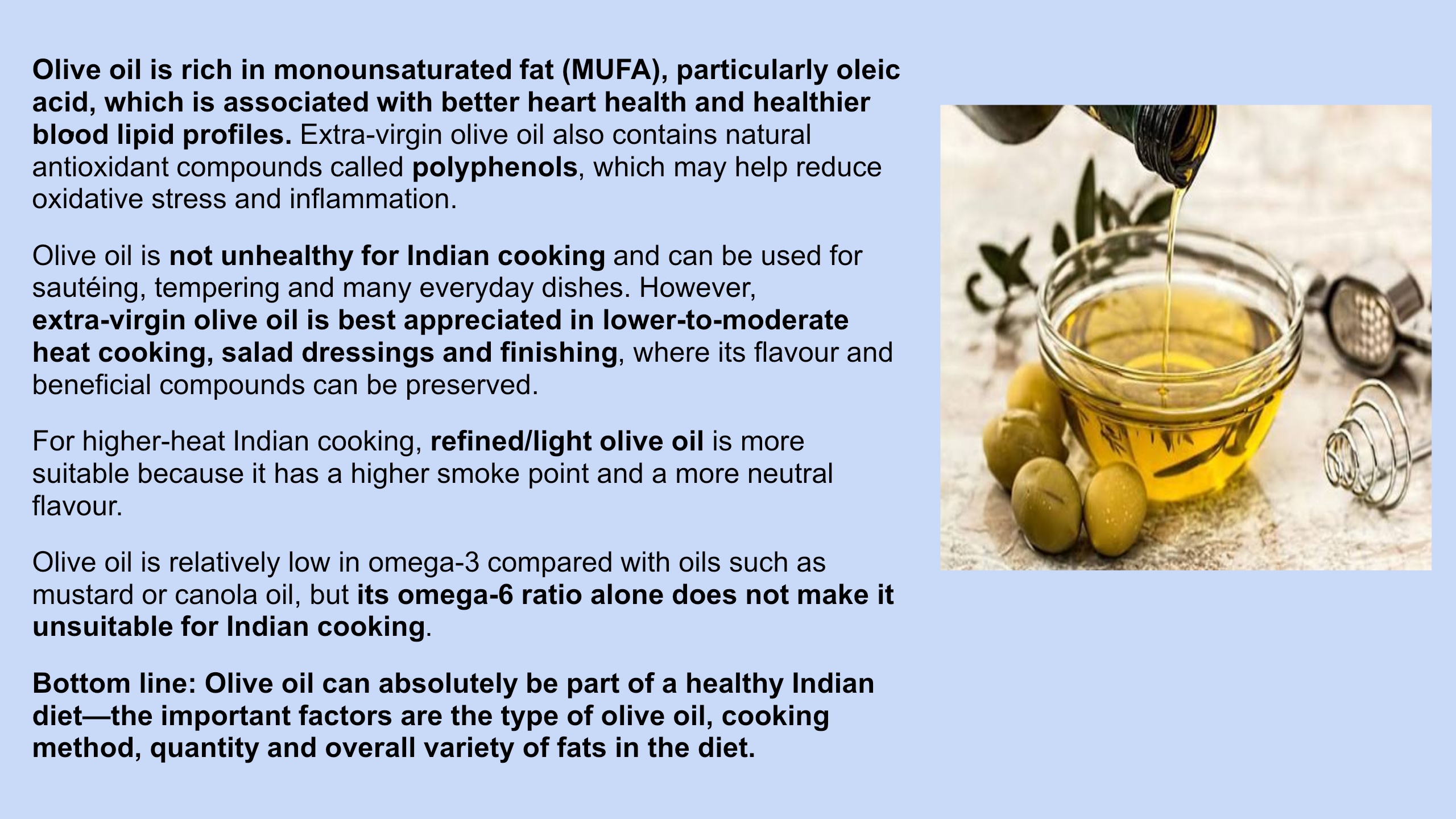
Olive oil is rich in monounsaturated fat (MUFA), particularly oleic acid, which is associated with better heart health and healthier blood lipid profiles. Extra-virgin olive oil also contains natural antioxidant compounds called polyphenols, which may help reduce oxidative stress and inflammation. Olive oil is not unhealthy for Indian cooking and can be used for sautéing, tempering and many everyday dishes. However, extra-virgin olive oil is best appreciated in lower-to-moderate heat cooking, salad dressings and finishing, where its flavour and beneficial compounds can be preserved. For higher-heat Indian cooking, refined/light olive oil is more suitable because it has a higher smoke point and a more neutral flavour. Olive oil is relatively low in omega-3 compared with oils such as mustard or canola oil, but its omega-6 ratio alone does not make it unsuitable for Indian cooking. Bottom line: Olive oil can absolutely be part of a healthy Indian diet—the important factors are the type of olive oil, cooking method, quantity and overall variety of fats in the diet.

The truth

Olive oil for Indian cooking
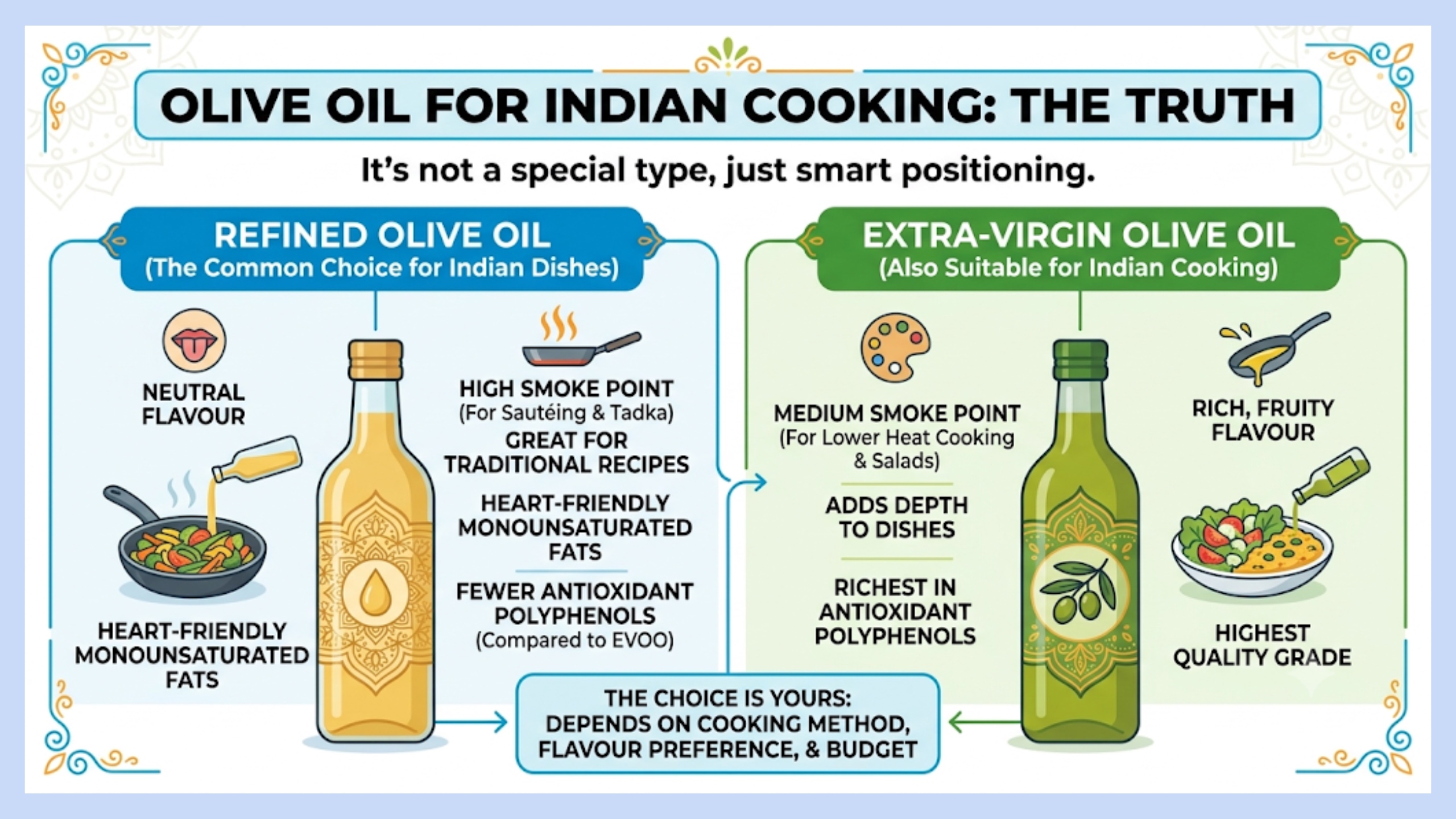
Olive oil for Indian cooking: the truth. It is not a special type, just smart positioning. Refined olive oil is a common choice for Indian dishes. It has a neutral flavour, a high smoke point for sautéing and tadka, works for traditional recipes, contains heart-friendly monounsaturated fats and has fewer antioxidant polyphenols than extra-virgin olive oil. Extra-virgin olive oil is also suitable for Indian cooking. It has a medium smoke point for lower-heat cooking and salads, a rich fruity flavour, adds depth to dishes, is richest in antioxidant polyphenols and is the highest quality grade. The choice depends on cooking method, flavour preference and budget.

A simple comparison

Olive oil types

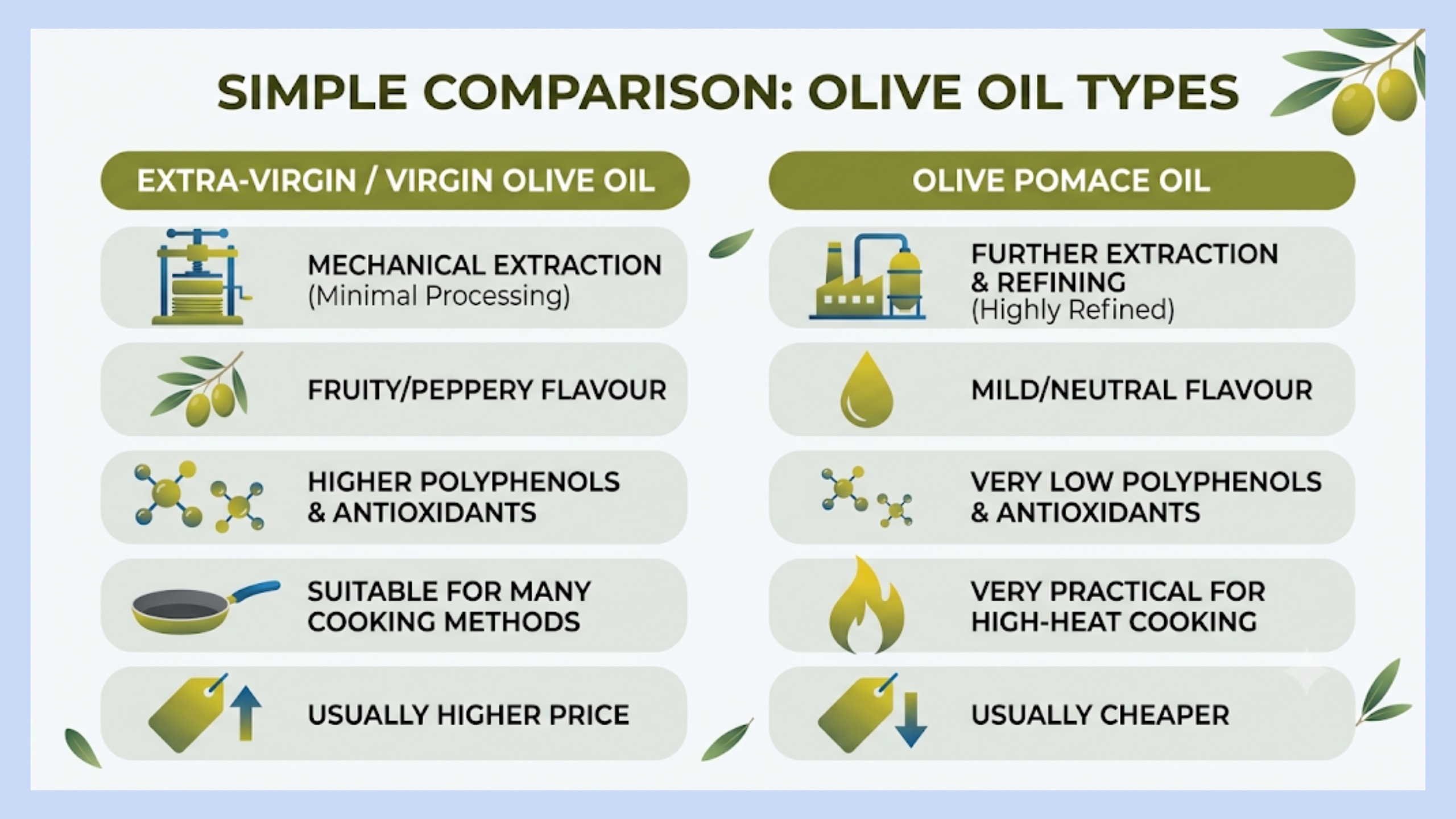
Simple comparison: olive oil types. Extra-virgin and virgin olive oil use mechanical extraction with minimal processing, have a fruity or peppery flavour, higher polyphenols and antioxidants, suit many cooking methods and are usually higher priced. Olive pomace oil uses further extraction and refining, has a mild or neutral flavour, very low polyphenols and antioxidants, is practical for high-heat cooking and is usually cheaper.