01 / 14
NEEYAFIT

NeeyaFit  ·  Nutrition webinar

Meet your coach
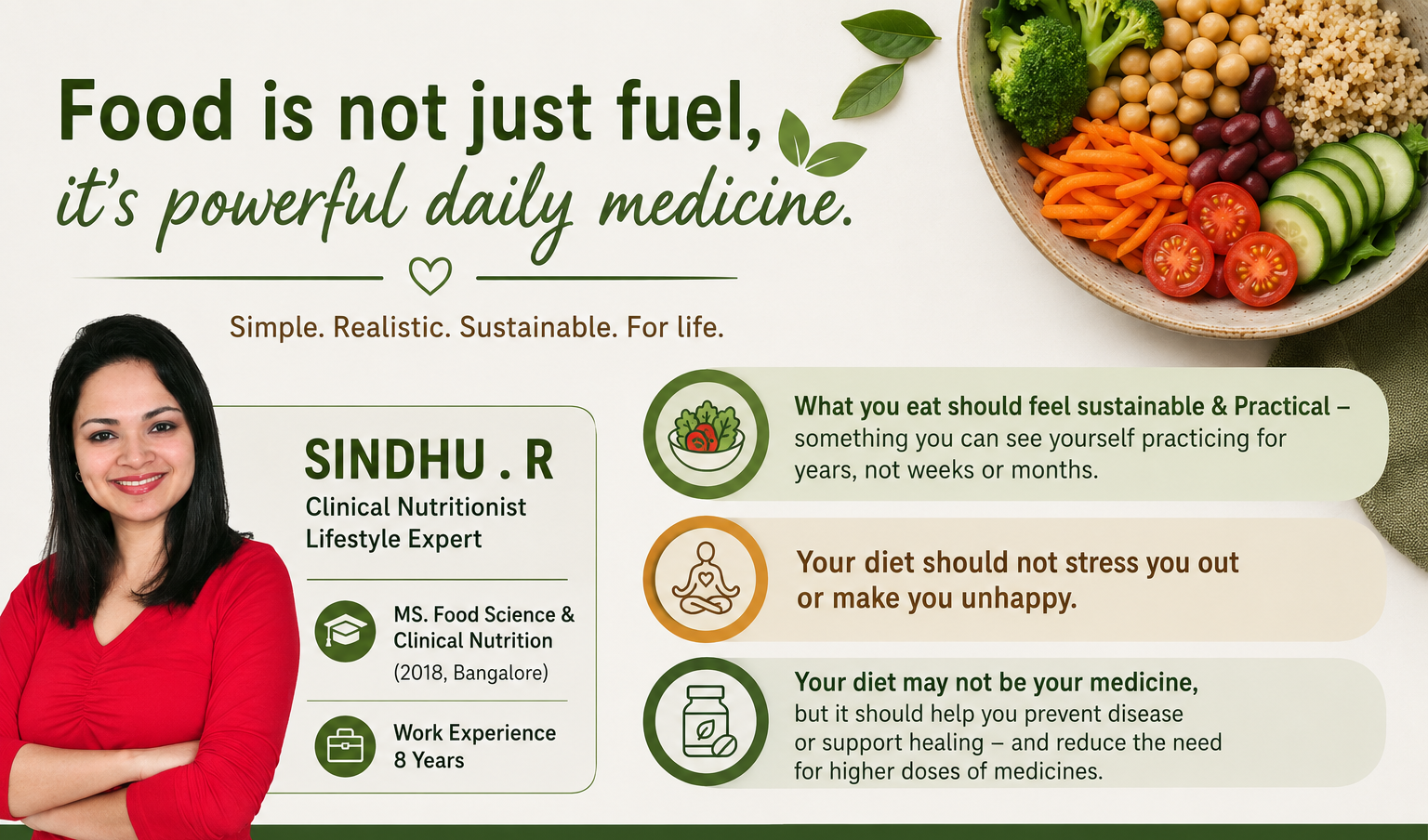
Sindhu R, clinical nutritionist and lifestyle expert. Food is not just fuel, it is powerful daily medicine. Simple, realistic, sustainable, for life.
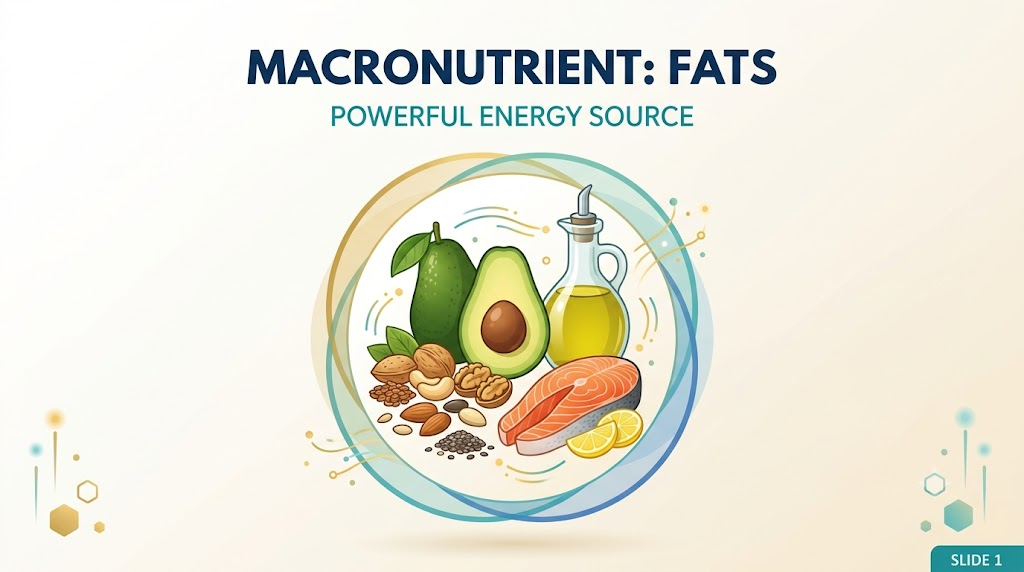
Macronutrient: Fats. Powerful energy source, illustrated with avocado, nuts, olive oil, salmon, and seeds.

Before we begin

When you hear “fat,” what comes to mind?
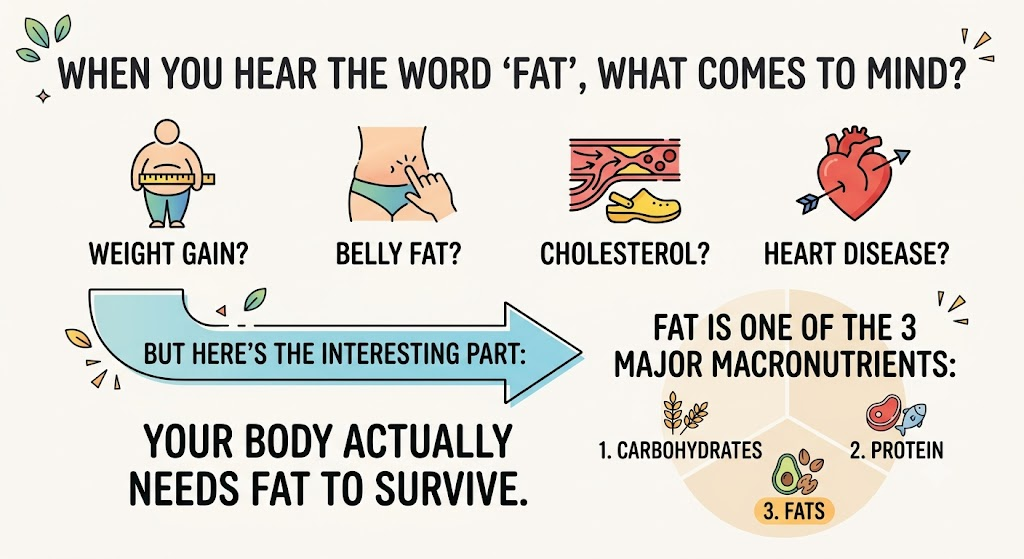
Weight gain, belly fat, cholesterol, and heart disease may come to mind. Fat is one of the three major macronutrients, and the body needs fat to survive.

The definition

The macronutrient fat


Fat occurs naturally in many foods and provides a concentrated source of energy. It is made mainly of fatty acids and can be saturated, monounsaturated, polyunsaturated, or trans fat.

9kcal per gram

More than twice the energy per gram of carbohydrate or protein.
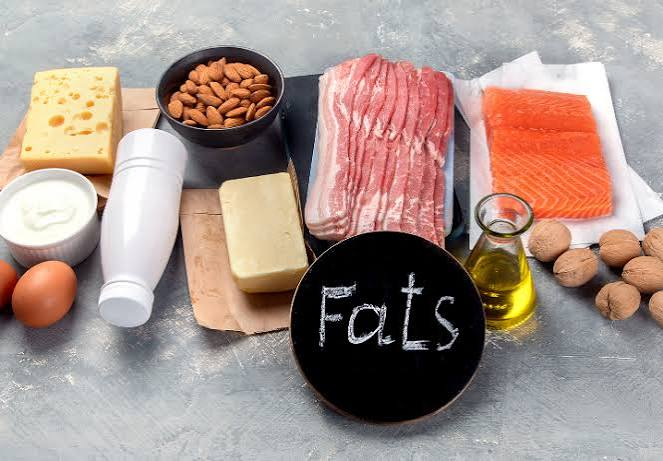
Cheese, yoghurt, milk, eggs, nuts, meat, salmon, and oil as food sources of fat.

The big three

The three major macronutrients
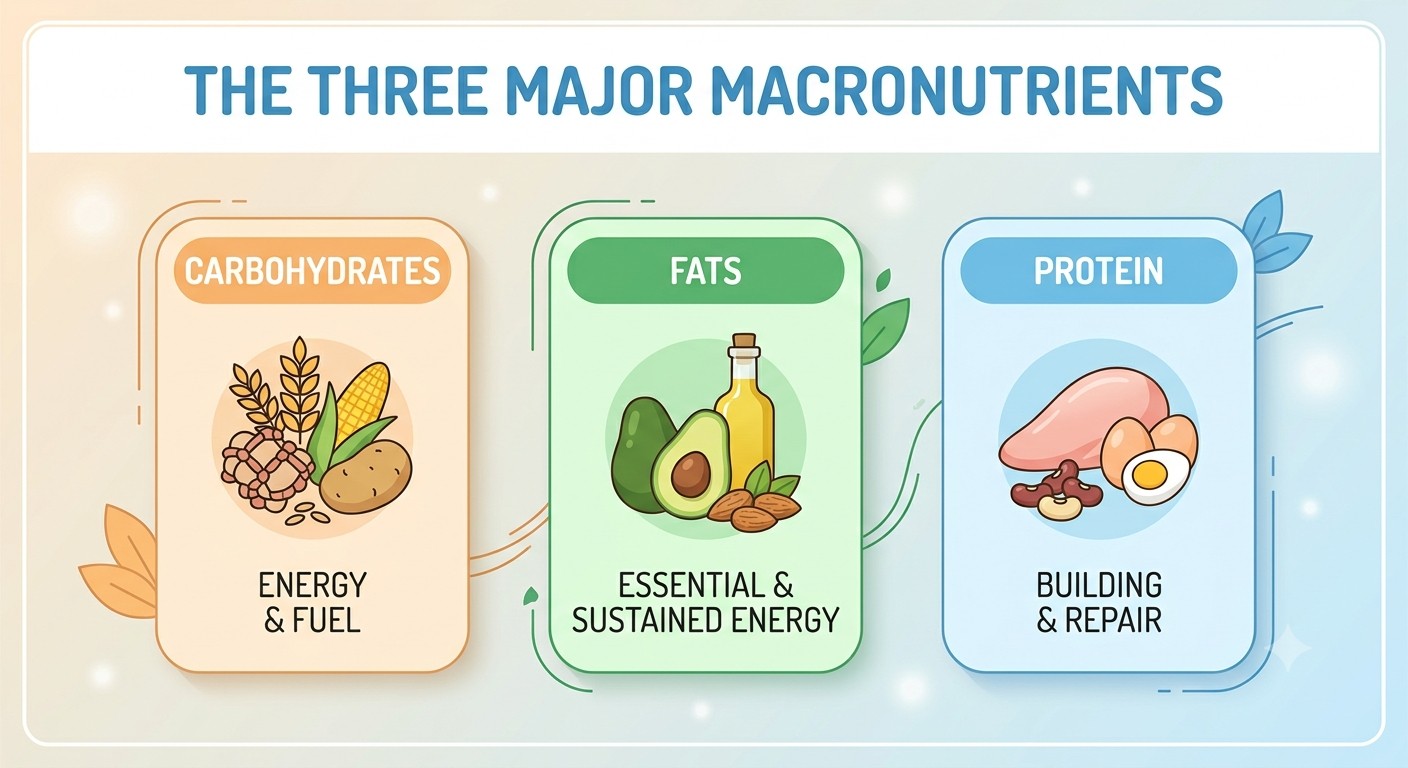
Carbohydrates provide energy and fuel. Fats provide essential and sustained energy. Protein supports building and repair.

The family tree

Understanding fats

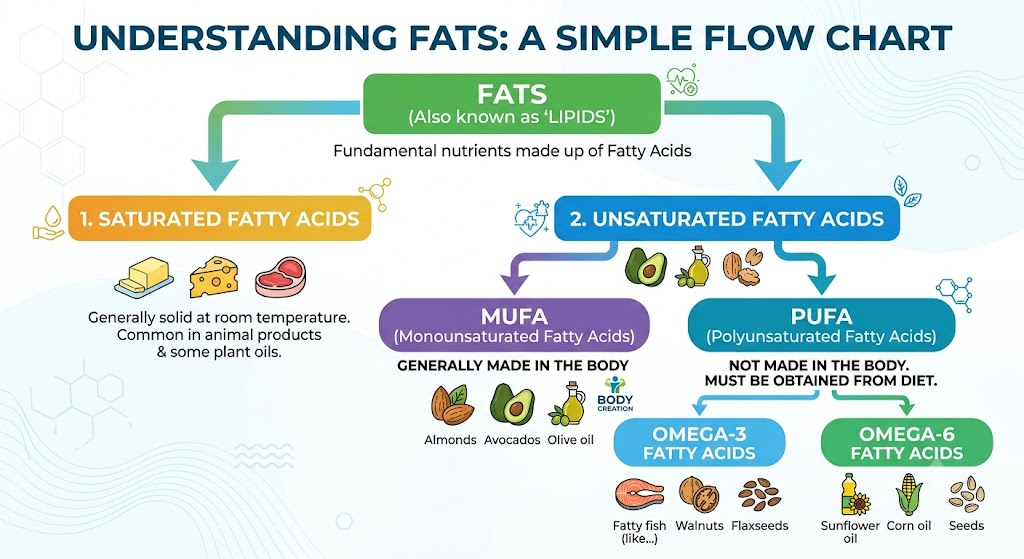
Fats include saturated and unsaturated fatty acids. Unsaturated fats include monounsaturated fats, omega-3 polyunsaturated fats, and omega-6 polyunsaturated fats, with illustrated food sources.

Five important jobs

Why the body needs fat


1

Brain and nervous system

Fat forms an important structural part of brain and nerve tissue.

2

Cell membranes

Every cell in the body has a membrane containing lipids.

3

Insulation and protection

Body fat helps maintain body temperature and cushions organs.

4

Vitamin absorption

Fat helps the body absorb vitamins A, D, E, and K.

5

Concentrated energy

At 9 kcal per gram, fat provides more than twice the energy per gram of carbohydrate or protein.

The fuller picture

Why does fat get a bad reputation?
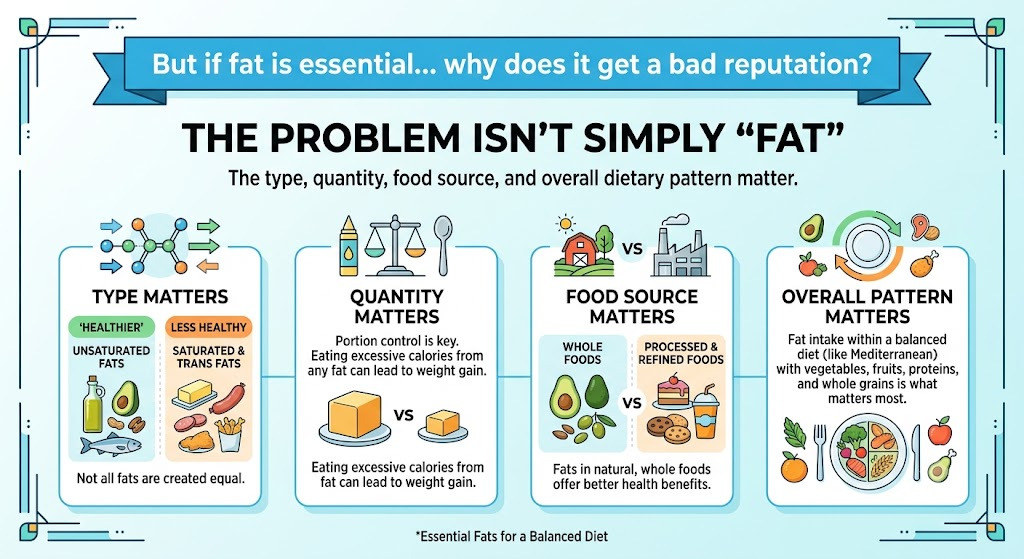
The problem is not simply fat. The type, quantity, food source, and overall dietary pattern matter.

Practical guidance

Fat intake and health
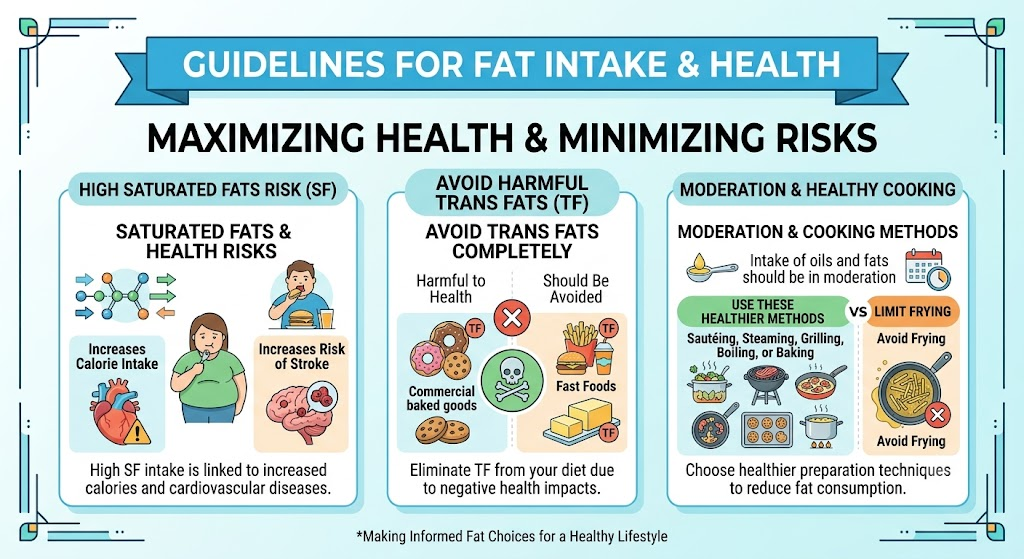
Guidelines for fat intake and health cover saturated fats, harmful trans fats, and healthier cooking methods.
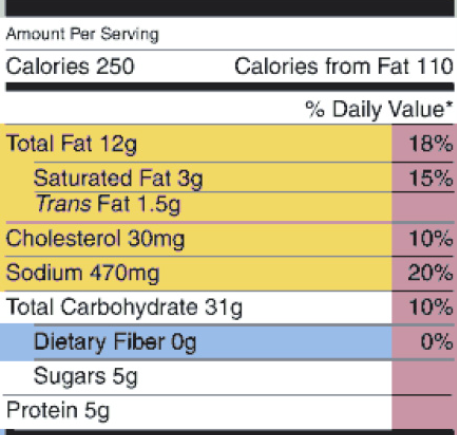
Nutrition label: 250 calories, 12 grams total fat, 3 grams saturated fat, 1.5 grams trans fat, 30 milligrams cholesterol, 470 milligrams sodium, 31 grams carbohydrate, and 5 grams protein.

Label practice

Let’s review this food label


  • Total fat12 g
  • Saturated fat3 g
  • Trans fat1.5 g
  • Cholesterol30 mg

Read the amount per serving and the percentage daily value together.

A misleading statement

Does eating fat automatically make you gain weight?
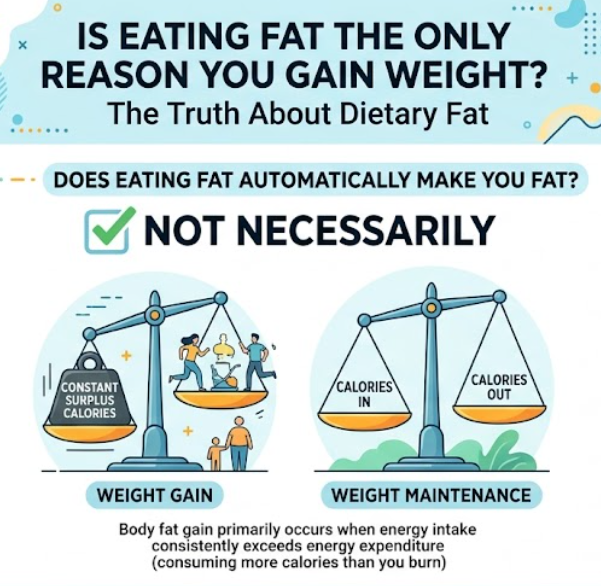
Eating dietary fat does not automatically cause weight gain. Weight gain occurs when energy intake consistently exceeds energy expenditure, while weight maintenance reflects balanced calories in and out.

The bigger questions

Fat matters, but it is not the only cause
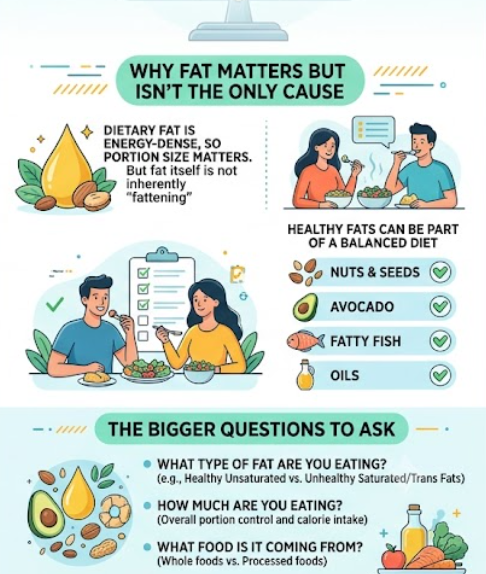
Dietary fat is essential, healthy fats can be part of a balanced diet, and the bigger questions include the type, amount, cooking method, and food source.

An important distinction

Dietary fat is not always equal to body fat
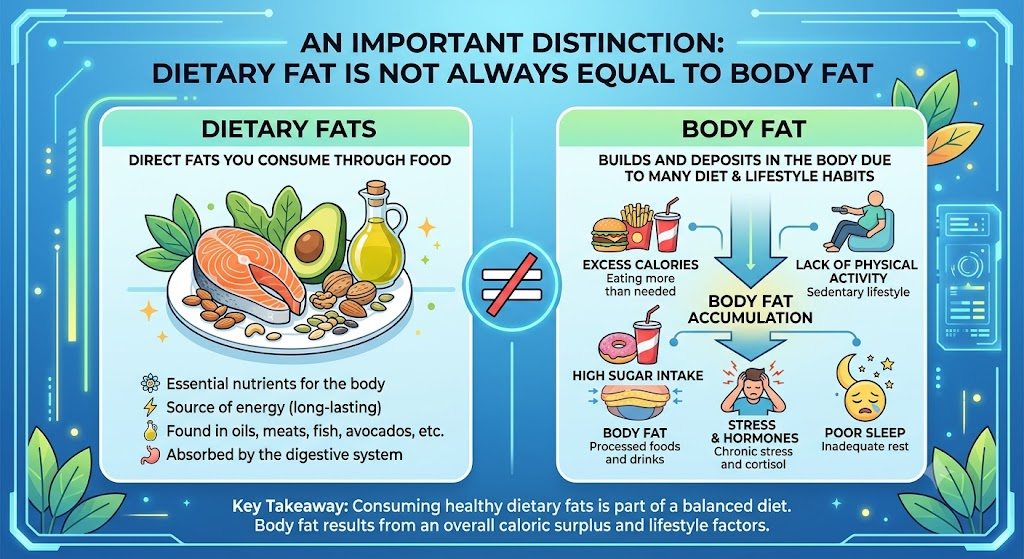
Dietary fat is fat consumed through food and supports essential body functions. Body fat is stored tissue that can accumulate through excess calories, physical inactivity, genetics, stress, hormones, or poor sleep.

THE END


Well done!

NeeyaFit  ·  Simple. Realistic. Sustainable. For life.