Overcoming 'Gymtimidation': Why You Belong in the Weight Room
Nithya Shree
Strength Coach & Founder
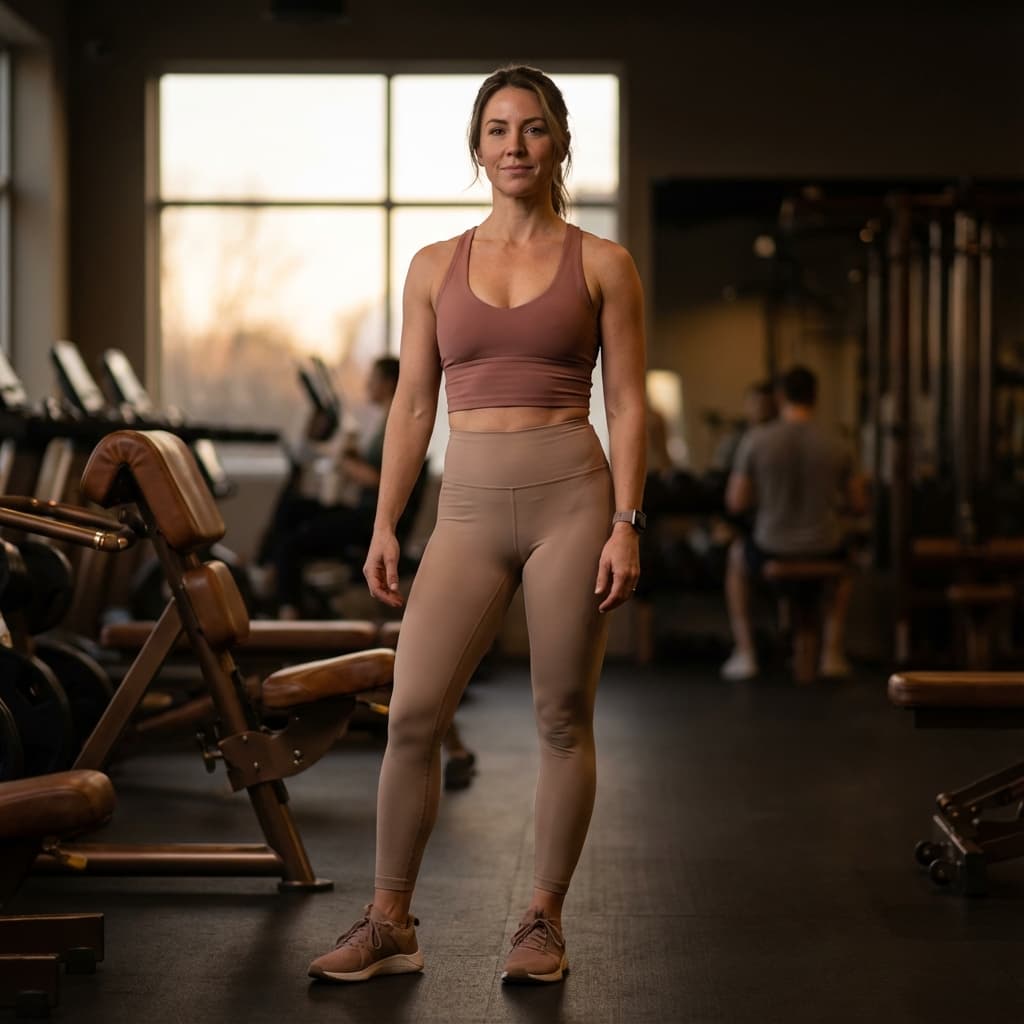
The Invisible Barrier
There is an invisible line in almost every commercial gym. On one side, the treadmills and ellipticals. On the other, the squat racks, dumbbells, and benches. For many women, crossing that line feels like stepping onto a battlefield without armor.
We call it "Gymtimidation"—and it's remarkably common. A survey by FitRated found that 65% of women avoid the gym primarily due to fear of judgment, compared to 36% of men (FitRated, 2019).
But here is the truth: That fear is the gatekeeper to your transformation.
Why We Hide on the Treadmill
Cardio equipment is safe. It is repetitive. It doesn't require "form". You just get on and go.
Strength training requires skill acquisition. It requires you to be vulnerable, to try something new, and potentially to fail for a few reps before you succeed.
We often tell ourselves: "I'll go to the weight room once I'm fit enough."
This is like saying: "I'll take a bath once I'm clean."
You go to the weight room to GET fit.
The "Spotlight Effect"
Psychology tells us about the "Spotlight Effect"—the tendency to overestimate how much others notice our behavior. Research from Journal of Personality and Social Psychology shows people believe they are being observed twice as much as they actually are (Gilovich et al., 2000).
Reality check: The guy grunting in the corner is too focused on his own bicep vein to notice you doing a goblet squat. The girl with the headphones is fighting her own demons.
Nobody is watching you. And if they are? They are likely admiring your courage to show up.
The Mental Health Connection
The benefits of overcoming gym anxiety extend far beyond fitness. A systematic review in JAMA Psychiatry found that resistance training significantly reduces anxiety symptoms, with effect sizes comparable to medication (Gordon et al., 2017).
The weight room isn't just building your muscles—it's building your resilience.
3 Steps to Claim Your Space
1. Go in with a Plan
Nothing breeds anxiety like wandering aimlessly. Know exactly what 4-5 exercises you are going to do before you walk through the door.
Research shows that exercise self-efficacy (belief in your ability to exercise) is the strongest predictor of adherence (McAuley, 1993). Having a plan builds that confidence.
2. The "Corner Strategy"
Find a quiet corner. Grab a set of dumbbells and a mat. Do your entire workout there. You don't need to roam the gym floor. Create your own "safety bubble" and work within it. Expand your territory only when you feel ready.
3. Wear Your "Armor"
Invest in gym clothes that make you feel powerful. Put on headphones with your favorite playlist. This is your sensory armor against the environment.
Strength is Your Birthright
Lifting weights is not just about muscle. It is about taking up space. It is about asserting that your body is capable of force, of power, of change.
When you conquer the fear of the weight room, you often find that other fears in your life—speaking up in meetings, setting boundaries—start to shrink too.
The weight room is for you. Claim it.
References
- FitRated. (2019). Gym Intimidation Survey. Source
- Gilovich, T., et al. (2000). The Spotlight Effect in Social Judgment. Journal of Personality and Social Psychology. PubMed
- Gordon, B. R., et al. (2017). The Effects of Resistance Exercise Training on Anxiety. JAMA Psychiatry. PubMed
- McAuley, E. (1993). Self-efficacy and the maintenance of exercise participation in older adults. Journal of Behavioral Medicine. PubMed