The Scientific Guide to Sustainable Strength Training for Women
Nithya Shree
Strength Coach & Founder
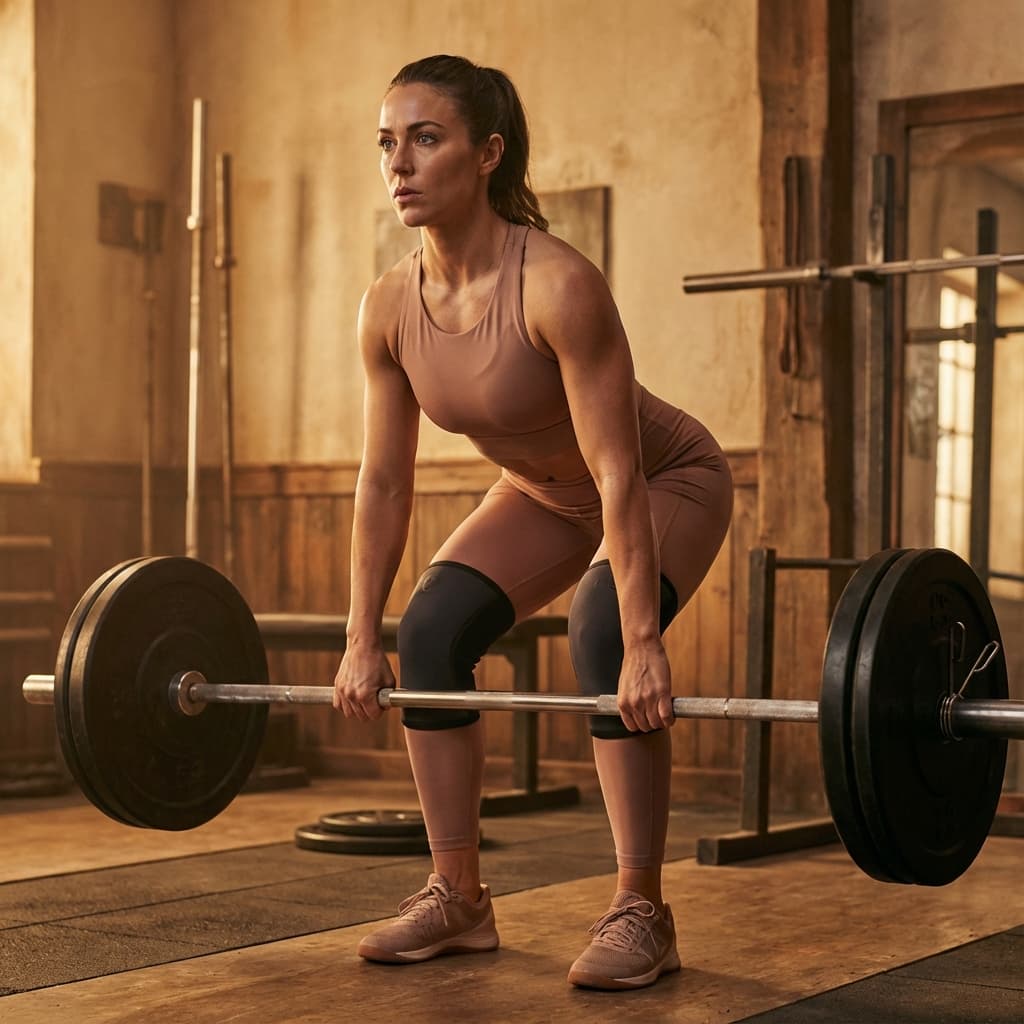
The "All or Nothing" Trap
If you've ever started a fitness program with intense motivation, only to crash and burn three weeks later, you are not alone. Research shows that approximately 50% of individuals who start an exercise program will drop out within the first 6 months (Dishman, 1988).
Most "generic" fitness plans fail women because they ignore a fundamental biological reality: The female body is not a small version of the male body. We have distinct hormonal fluctuations, recovery curves, and stress responses that require a tailored approach.
What is Sustainable Strength?
Sustainable strength is not about how much you can lift on your best day. It is about the maximum volume you can recover from consistently over years.
According to a landmark study in the Journal of Strength and Conditioning Research, training frequency of 2-3 sessions per week produces 80-90% of the hypertrophy gains seen with higher frequencies, with significantly better adherence rates (Schoenfeld et al., 2016).
The Golden Rule: Consistency beats intensity. Always.
When we train for sustainability, we shift the focus from "burning calories" to "building capacity".
The 3 Pillars of Female-Centric Training
1. Auto-Regulation & The Menstrual Cycle
Your hormones are not an inconvenience; they are a dashboard.
Research from the European Journal of Applied Physiology demonstrates that strength and power output can vary by 8-15% across the menstrual cycle (Sung et al., 2014):
- Follicular Phase (Days 1-14): Estrogen rises, enhancing muscle protein synthesis and recovery. This is when we push for PRs (Personal Records).
- Luteal Phase (Days 15-28): Progesterone rises, body temperature increases by 0.3-0.5°C, and recovery slows. This is the time for deloading or focusing on technique rather than max load.
Ignoring these phases is a primary driver of burnout and injury in female athletes.
2. Minimum Effective Dose (MED)
More is not better. Better is better.
The NSCA (National Strength and Conditioning Association) Position Statement on resistance training states that for general fitness, 2-3 sessions of focused strength training per week provide most of the benefits (NSCA, 2019).
By finding your MED, you leave energy reserves for your career, family, and recovery—ensuring you don't quit when life gets busy.
3. Progressive Overload (The Right Way)
You don't need to add weight every single session. A meta-analysis in Sports Medicine identified multiple valid progression methods (Plotkin et al., 2022):
- Better form (technique)
- Slower tempo (time under tension)
- Less rest between sets (density)
- More reps with the same weight
How We Program at Neeyafit
Our philosophy is built on the "Niche of One" principle for every client. We don't hand out PDFs. We build agile systems that adapt to your life.
If you are a busy professional, a 90-minute gym session is a bug, not a feature. We design protocols that maximize the stimulus-to-fatigue ratio, getting you the adaptation you need without the systemic exhaustion.
Ready to Build Real Strength?
Strength training is the highest ROI investment you can make in your long-term health. Research shows it increases bone mineral density by 1-3% annually, critical for women facing osteoporosis risk (Layne & Nelson, 1999).
Don't start another "challenge". Start a practice.
Book a Free Consultation with Nithya to discuss your sustainable path forward.
References
- Dishman, R. K. (1988). Exercise adherence: Its impact on public health. Human Kinetics. PubMed
- Schoenfeld, B. J., et al. (2016). Effects of Resistance Training Frequency on Measures of Muscle Hypertrophy. Journal of Strength and Conditioning Research. PubMed
- Sung, E., et al. (2014). Effects of follicular versus luteal phase-based strength training. European Journal of Applied Physiology. PubMed
- Plotkin, D., et al. (2022). Progressive overload without progression. Sports Medicine. PubMed
- Layne, J. E., & Nelson, M. E. (1999). The effects of progressive resistance training on bone density. Medicine and Science in Sports and Exercise. PubMed